Correct option is A
Explanation:
1.
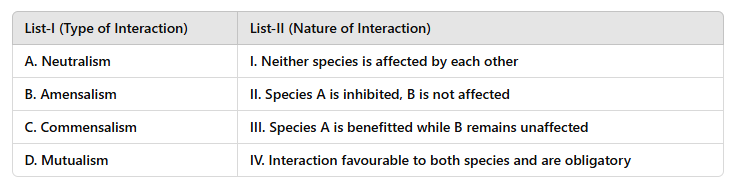
Neutralism (A-I):
·
Neutralism refers to an interaction where
neither species is affected by the presence of the other. This is the least direct form of interaction, representing a neutral relationship.
2.
Amensalism (B-II):
·
Amensalism is a relationship where
Species A is inhibited or harmed, while Species B is not affected. An example is when a plant releases a chemical that inhibits other plants' growth, but the producer itself remains unaffected.
3.
Commensalism (C-III):
·
Commensalism describes a relationship where
Species A benefits, while Species B remains unaffected. A classic example is barnacles attaching to whales for transport and feeding opportunities without harming the whale.
4.
Mutualism (D-IV):
·
Mutualism is an interaction where
both species benefit and the relationship is often obligatory for survival. An example is bees pollinating flowers while obtaining nectar.
Information Booster:
1.
Neutralism:
· Rare in nature due to the interconnectedness of ecosystems.
· Example: Two different species of birds feeding on separate food resources in the same area.
2.
Amensalism:
· Common in plant ecosystems (allelopathy).
· Example: Walnut trees secrete juglone, a substance that inhibits the growth of nearby plants.
3.
Commensalism:
· One-sided benefit without harm.
· Example: Remora fish attaching to sharks for transportation and feeding on leftovers.
4.
Mutualism:
· Essential for many ecosystem services.
· Example: Lichens represent a mutualism between fungi and algae.
Additional Knowledge:
·
Neutralism (I): Represents true non-interaction, although difficult to identify in nature.
·
Amensalism (II): Differentiates from parasitism as one species remains unaffected rather than benefiting.
·
Commensalism (III): Differentiates from mutualism as only one species benefits.
·
Mutualism (IV): Can be classified as
facultative (optional) or
obligatory (necessary).
 English
 10 Questions
 20 Marks
 12 Mins