Correct option is C
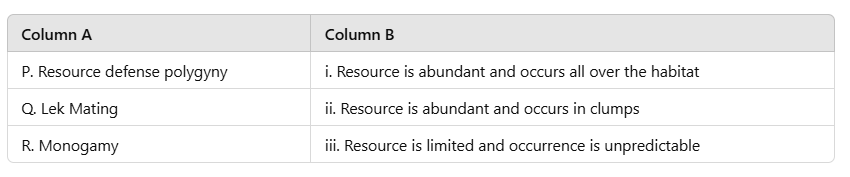
The correct answer is: (3) P = ii; Q = i; R = iii
Explanation:
Resource defense polygyny (P) occurs when males defend resources that are valuable to females. This system works best when the resources are abundant and occur in clumps (ii), as males can defend clusters of resources where females are likely to gather.
Lek mating (Q) involves males gathering in a specific area (a lek) where they display to attract females. This is typically associated with resources being abundant and occurring all over the habitat (i), allowing females to choose mates based on the males' displays, rather than resource control.
Monogamy (R), where one male mates with one female, tends to occur when resources are limited and their occurrence is unpredictable (iii). This forces males to pair with females to cooperate in raising offspring since resources are not easily defended or are too scarce.
Information Booster:
Resource defense polygyny is effective when resources are concentrated in specific areas, as it allows males to monopolize these resources for female attraction.
Lek mating occurs in environments where resources are plentiful and not necessarily tied to specific locations, allowing males to compete for female attention in open areas.
Monogamy is most common in environments where resources are limited or unpredictable, making it beneficial for males and females to cooperate to raise offspring.
Additional Information:
Option 1 (P = i; Q = ii; R = iii): Incorrect because Q (lek mating) is associated with abundant resources, not limited resources.
Option 2 (P = ii; Q = iii; R = i): Incorrect because Q (lek mating) should be associated with abundant resources across the habitat.
Option 4 (P = iii; Q = i; R = ii): Incorrect because P (resource defense polygyny) should be associated with resources in clumps, not scarce and unpredictable ones.