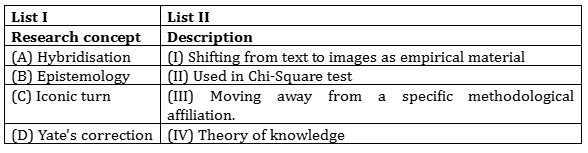
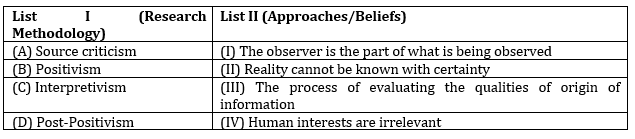
Correct option is B
Middle-range theories operate within a limited domain in research, as they focus on specific aspects of social phenomena rather than attempting to explain broad, universal principles. Developed by sociologist Robert K. Merton, middle-range theories are not as narrow as empirical observations nor as broad as grand theories. Instead, they provide insights into particular areas or issues, allowing researchers to apply theoretical ideas to practical situations within a specific scope.
Information Booster: 1. Scope of Middle-Range Theories: They apply to specific aspects or fields rather than attempting overarching explanations.
2. Practical Application: These theories are often grounded in empirical research, making them useful for applied and practical contexts.
3. Examples: Theories on social mobility, reference groups, and role conflict are all considered middle-range theories.
4. Origin: Developed by Robert K. Merton to bridge the gap between empirical research and grand theories.
5. Flexibility: Middle-range theories allow adjustments and refinement as new empirical data becomes available.
6. Relevance in Social Sciences: They address phenomena like deviance, power structures, and socialization within defined contexts.
7. Connection to Empirical Data: Middle-range theories are closely linked to observable and measurable data.
 English
 10 Questions
 20 Marks
 12 Mins