Correct option is D
Given:
x² - 3x + 1 = 0
Formula Used:
Solution:
x² - 3x + 1 = 0
Divide by x both side:
......(1).
Squaring both side:
....(2)
Add equation (1) and (2);
Thus, the correct answer is (d).







If x² - 3x + 1 = 0 then what is the value of ?
Given:
x² - 3x + 1 = 0
Formula Used:
Solution:
x² - 3x + 1 = 0
Divide by x both side:
......(1).
Squaring both side:
....(2)
Add equation (1) and (2);
Thus, the correct answer is (d).
 English
 10 Questions
 10 Marks
 8 Mins English English10 Questions20 Marks5 Mins English English10 Questions20 Marks5 Mins English
For what values of b, the quadratic equation 4x² + bx + 16 = 0 has equal real roots?
Determine the nature of the roots of the quadratic equation 3x² + 2x + 5 = 0.
Find the value of K if the quadratic equations have both roots common.
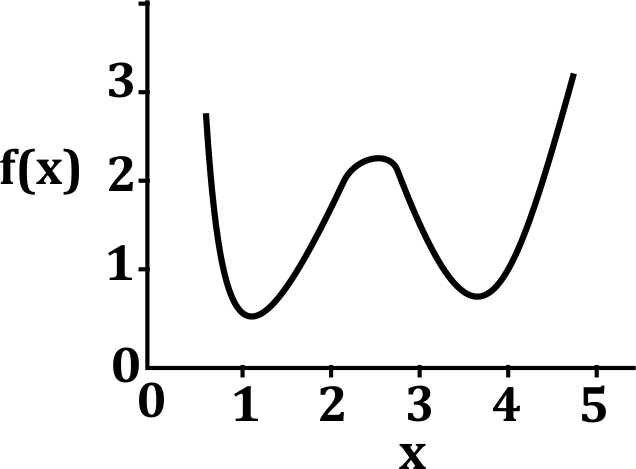
How many real roots does the continuous function f of a variable x shown below have in the interval 0.5 < x < 4.5?
Roots of the equation are:
The nature of the roots of the quadratic equation is:
If the roots of the quadratic equation are equal, find the value of .
The roots of are:
The roots of the quadratic equation are:


Suggested Test Series

Suggested Test Series
