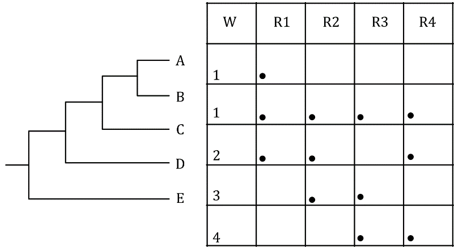
Correct option is B
Explanation-
Statement A: "Smaller fragments will always have lower species richness than larger fragments." - INCORRECT
While smaller fragments tend to support fewer species than larger ones, it's not always true. Some small patches can be surprisingly rich in species due to factors like Edge effects, microclimate and refuge areas
The use of the word "always" makes this statement too absolute, which is why it's rejected.
Statement B: "Species richness will depend on fragment size." - CORRECT
This is a well-established ecological principle. Larger fragments generally contain more diverse habitats , support more species and provide more resources and space
Hence, species richness does depend on fragment size.
Statement C: "Species richness will depend on physical connectivity between fragments." - CORRECT
Connectivity (like wildlife corridors or proximity of fragments) influences dispersal of individuals between patches, gene flow between populations, colonization and recolonization after local extinctions
Well-connected fragments tend to support higher species richness.
Statement D: "Species richness cannot be compared between large and small fragments." - INCORRECT
Species richness can be compared across different fragment sizes — in fact, such comparisons are a basic part of landscape ecology and conservation biology. This statement is factually wrong.
Final Answer: Option (b) – B and C are correct.