Correct option is A
· Statement (A) is correct:
· In the short-run, Total Fixed Cost (TFC) remains constant.
· This means that any change in Total Cost (TC) is entirely due to the change in Total Variable Cost (TVC).
· Mathematically: ΔTC=ΔTVC\Delta TC = \Delta TVCΔTC=ΔTVC
· This is because fixed costs do not change with output in the short run.
· Statement (C) is correct:
· If the decrease in Average Fixed Cost (AFC) is exactly equal to the increase in Average Variable Cost (AVC), then the Average Cost (AC) remains constant.
· If one component decreases and another increases by the same amount, the total remains unchanged.
Information Booster
· Average Fixed Cost (AFC) always decreases as output increases because:
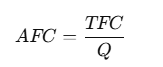
· Average Variable Cost (AVC) may increase or decrease depending on the efficiency of production.
· Short-run cost functions are important for understanding cost behavior in decision-making.
Additional Knowledge
· Why are (B) and (D) incorrect?
· (B) is incorrect because if AFC decreases by less than the increase in AVC, the net effect on AC is increase, not decrease.
· (D) is incorrect because if AFC decreases by more than the increase in AVC, AC decreases, not increases.
 English
 10 Questions
 20 Marks
 12 Mins