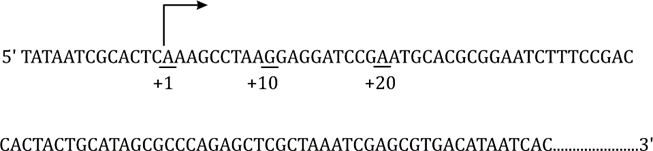
Correct option is A
Erythromycin is a macrolide antibiotic that inhibits bacterial protein synthesis by targeting the 50S ribosomal subunit. Its specific mechanism of action involves:
- Binding to the 23S rRNA of the 50S subunit, which blocks the exit tunnel of the growing polypeptide chain.
- Preventing elongation by inhibiting peptide bond formation and translocation of the ribosome along the mRNA.
- Allowing translation initiation to occur, meaning that the ribosome can start translation and produce a few amino acids before elongation is blocked.
Thus, translation of the first few codons occurs before elongation is inhibited, making Option 1 the correct answer.
Analysis of Other Options:
Option 2 (Incorrect )
- The statement suggests that erythromycin prevents formation of even the first peptide bond, which is incorrect.
- Erythromycin does not inhibit initiation; it only affects elongation after a few codons have been translated.
Option 3 (Incorrect )
- Erythromycin does not inhibit the formation of the translation initiation complex.
- Initiation occurs normally, and translation starts, but elongation is blocked after a few codons.
Option 4 (Incorrect )
- The statement is incorrect because erythromycin does not cause faulty initiation with elongator tRNAs.
- Instead, it blocks the elongation step of protein synthesis.