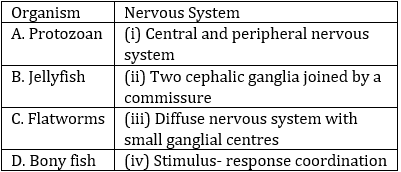
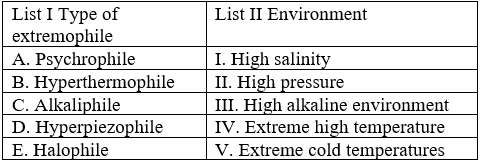
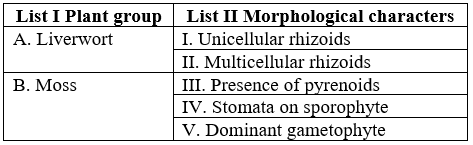
Correct option is D
The correct answer is (d) Rosaceae. The Rosaceae family, commonly known as the rose family, contains the largest number of species among the options listed. It includes approximately 4828 species spread across around 90–100 genera. This family is highly diverse and includes economically and ecologically significant species like apples, cherries, roses, and strawberries.
In comparison, Brassicaceae (mustard family) and Cucurbitaceae (gourd family) have fewer species, while Cactaceae (cactus family) is primarily restricted to arid regions and has less diversity.
Information Booster:
- Rosaceae:
- Around 4828 species.
- Includes genera like Rosa (roses), Malus (apples), and Rubus (blackberries).
- Distributed in temperate regions.
- Brassicaceae:
- Approximately 4,000 species but fewer genera (~340).
- Includes economically important crops like cabbage, mustard, and broccoli.
- Cucurbitaceae:
- Around 965 species in 98 genera.
- Includes gourds, pumpkins, and cucumbers.
- Cactaceae:
- Contains about 1,500–2,000 species.
- Mostly restricted to arid and semi-arid regions.
Additional Knowledge:
(a) Brassicaceae:
Also known as the mustard family, it includes herbaceous plants commonly found in temperate regions. While it has notable agricultural importance, such as cabbage (Brassica oleracea) and mustard (Brassica nigra), it has fewer species compared to Rosaceae.
(b) Cucurbitaceae:
Known as the gourd family, it is primarily tropical and includes plants like pumpkins (Cucurbita), watermelons (Citrullus), and cucumbers (Cucumis). The family is smaller in species count compared to Rosaceae.
(c) Cactaceae:
This family primarily consists of succulents adapted to arid climates. While iconic in deserts, the family is less diverse compared to Rosaceae, with fewer genera and species.
(d) Rosaceae:
This is the correct answer. It is a large and diverse family found globally, especially in temperate zones, with many species valued for their flowers, fruits, and ornamental uses