Correct option is A
r-selected species are characterized by traits that allow them to rapidly exploit new habitats and thrive in unpredictable or ephemeral environments. These species are typically small, fast-growing, and produce many offspring with little parental investment.
Here’s why Option 1 is not characteristic of r-selected species:
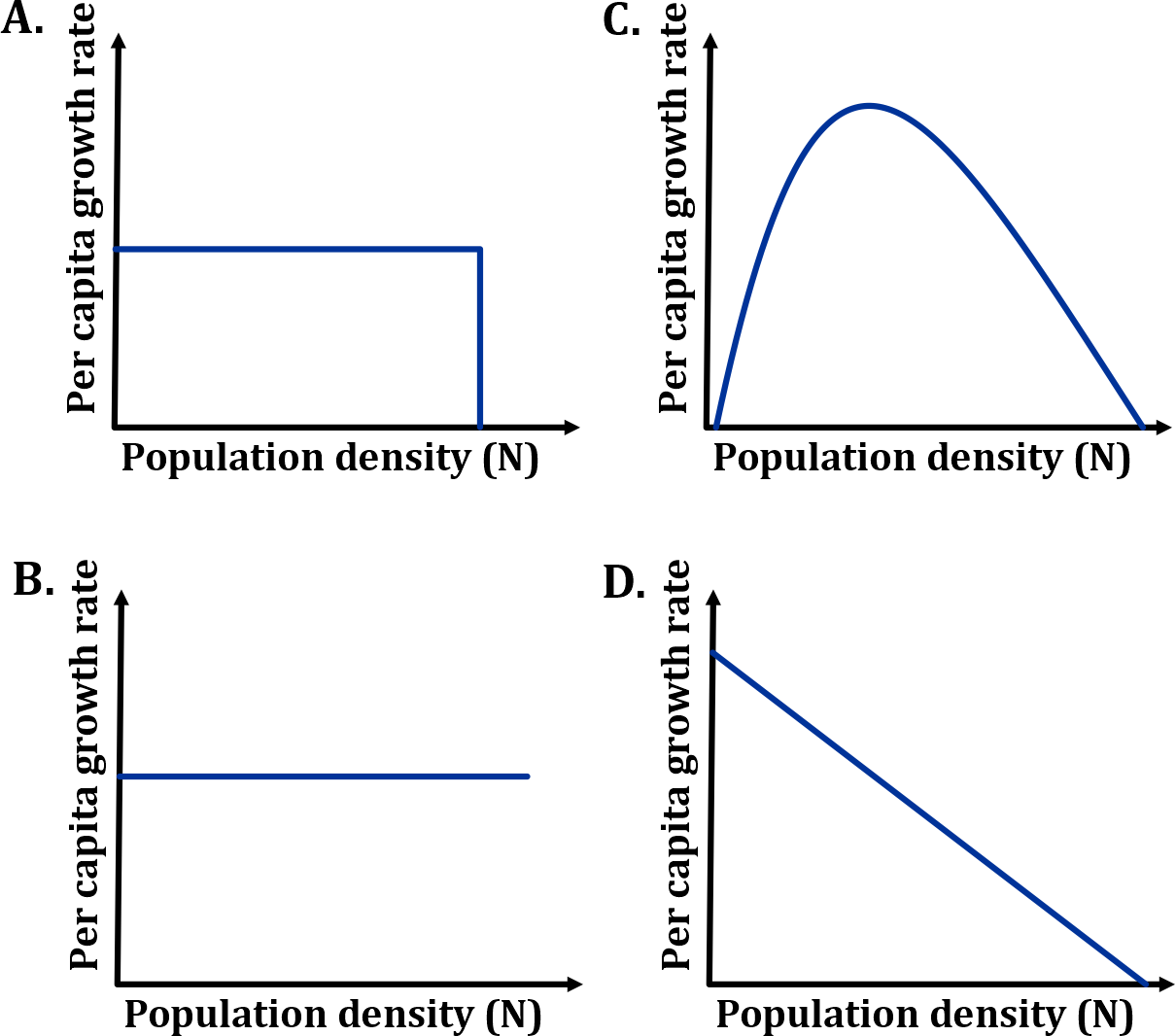
- r-selected species generally experience density-independent mortality and reproduction. This means that their population dynamics (such as reproduction and survival rates) are not significantly impacted by population density. In contrast, K-selected species are density-dependent, meaning that their growth rates and reproduction are regulated by the available resources and population density.
Information Booster:
- r-selected species typically exhibit high reproductive rates, producing many offspring in a short period.
- These species often have a short lifespan and are adapted to environments where resources are abundant for brief periods.
- Examples of r-selected species include many types of weeds, insects, and small mammals.
- They are often found in disturbed or changing environments where rapid colonization and reproduction are essential for survival.
- r-selection is contrasted with K-selection, where organisms are adapted to stable environments with longer lifespans, fewer offspring, and greater parental investment.