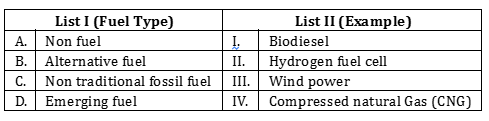
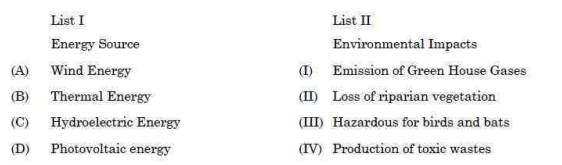
Correct option is A
Energy crops are typically fast-growing plants (A) that are cultivated for their ability to produce gaseous and liquid fuels (D) such as ethanol, biodiesel, and biogas. These crops generally have a high calorific value (E), making them efficient sources of bioenergy. Contrary to statements B and C, energy crops do not necessarily require specific seasons or fertile land, as they can often be grown in marginal or less fertile soils.
Information Booster: 1. Energy crops: Crops like switchgrass, miscanthus, and certain types of algae are used for biofuel production.
2. Fast-growing: These crops are cultivated for rapid biomass production.
3. Biofuels: Energy crops can be converted into biofuels, including ethanol (from sugarcane) and biodiesel (from oilseeds).
4. High calorific value: Energy crops produce a significant amount of energy when burned or converted into fuel.
5. Energy crops do not always need fertile land, making them sustainable options for bioenergy on marginal lands.
6. They play an important role in reducing dependency on fossil fuels and lowering carbon emissions.
 English
 10 Questions
 20 Marks
 12 Mins