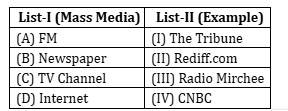
Correct option is D
The Buddhist concept of communication is based on compassion, mindfulness, and ethical dialogue, promoting harmonious and meaningful interactions. Unlike Western communication models, which can be linear and sender-focused, Buddhist communication is interactive, relational, and process-driven, emphasizing the intent, behavior, and effect of communication rather than just message transmission.
- Process-oriented (B): Buddhist communication sees communication as an ongoing, mindful process, focusing on awareness and ethical intent rather than just transmitting information.
- Creation of meaning (D): It emphasizes shared understanding through dialogue, ensuring that meaning is co-constructed rather than imposed.
- Behaviour-centred (E): The Buddhist perspective on communication is deeply rooted in ethical conduct (Sīla), encouraging truthfulness, kindness, and non-harmful speech.
Information Booster:
- Right Speech (Sammā Vācā) in the Eightfold Path promotes truthful, compassionate, and meaningful communication.
- Buddhist communication avoids aggressive, deceptive, or manipulative speech, focusing instead on clarity, mindfulness, and ethical expression.
- Interdependence in communication aligns with Buddhist teachings, emphasizing the relational aspect of creating meaning together.
- Listening (Sravana) and contemplation (Manana) are essential in Buddhist communication, fostering deep understanding.
- Silence is considered a powerful communicative tool in Buddhism, used for reflection and mindful engagement.
Additional Information:
- Unidirectional (A): Buddhist communication is interactive and reciprocal, not a one-way process.
- Competitiveness (C): Unlike competitive models of debate and persuasion, Buddhist communication prioritizes harmony, cooperation, and mutual respect over winning arguments.
 English
 10 Questions
 20 Marks
 12 Mins