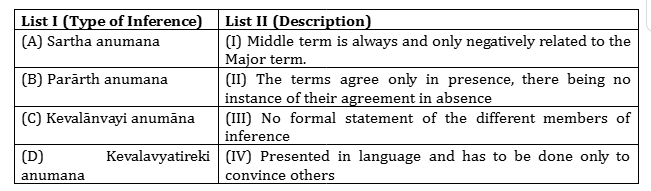
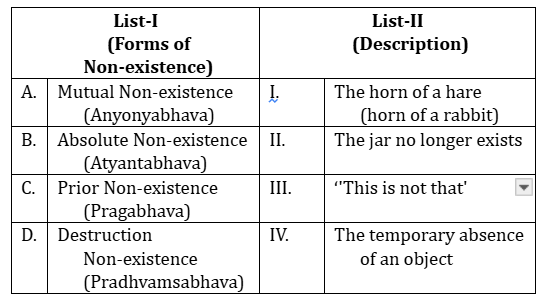
Correct option is C
The correct answer is (c) Samanyatodrsta.
Samanyatodrsta is a type of inference in Indian logic that is based on the uniformity of co-existence between two or more properties. It is not based on causation, but rather on the observation that these properties tend to occur together. For example, we can infer that an animal has cloven hooves if it has horns, because we have observed that these two properties always co-exist in the past.
Information Booster:
Purvavat Anumnana: This is a type of inference that is based on the assumption that the cause always precedes the effect. For example, we can infer that the sun will rise tomorrow because it has always risen in the past.
Sesavat Anumnana: This is a type of inference that is based on the assumption that the effect always follows the cause. For example, we can infer that the water boiled because we saw the pot start to steam.
Paksadharmata: This is a type of inference that is based on the assumption that the middle term is always present in the instances of the major term. For example, we can infer that all cats are animals because we have seen all cats that we have encountered be animals.
 English
 10 Questions
 20 Marks
 12 Mins