






Correct option is D
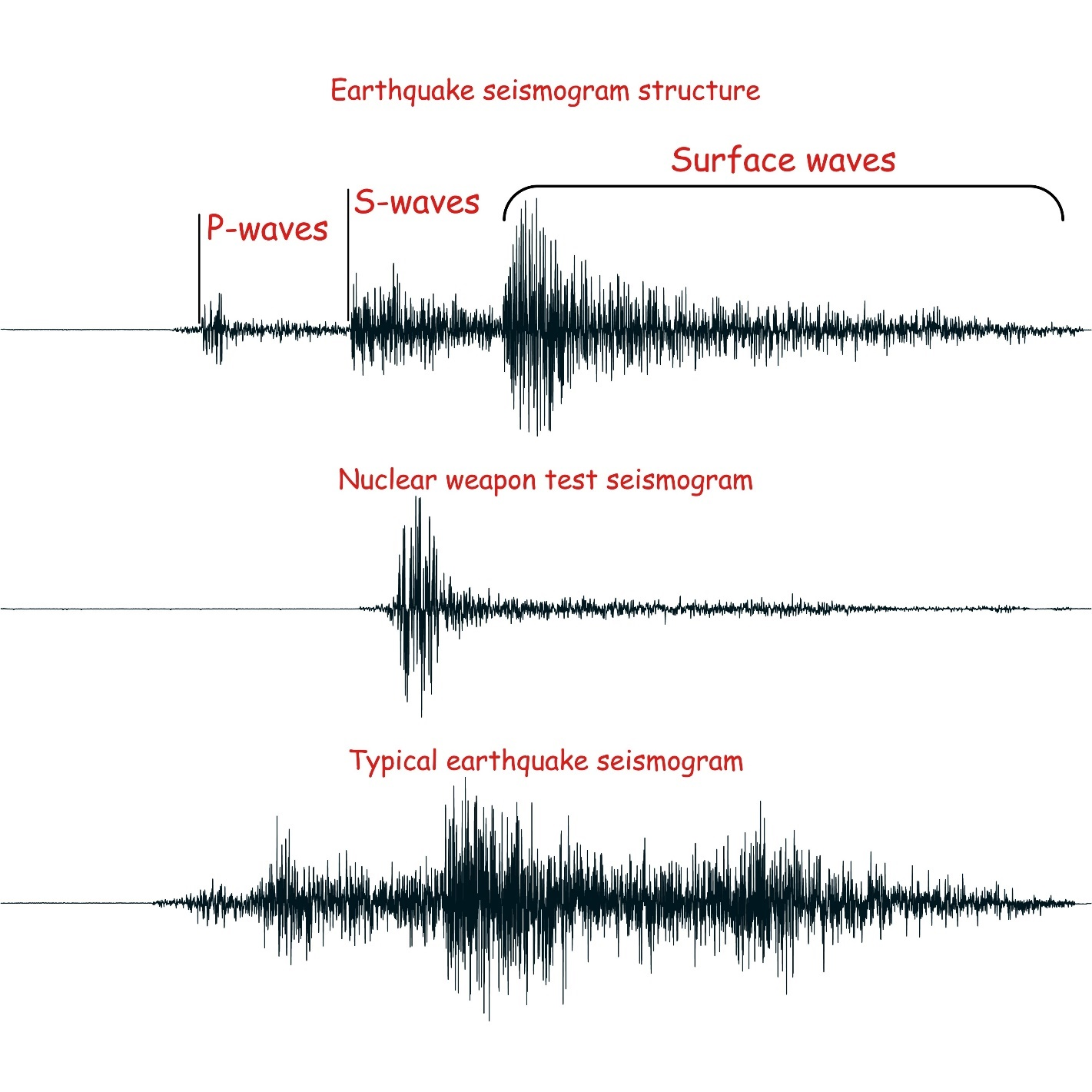
The correct answer is (d) P-waves, S-waves, surface waves
Explanation:
· Seismic waves travel at different speeds, which determines the order in which they are recorded by a seismograph.
·
P-waves (Primary Waves): These are the
fastest waves and are the
first to arrive at the surface.
·
S-waves (Secondary Waves): These travel slower than P-waves and arrive
second.
·
Surface Waves (L-waves/R-waves): These travel along the Earth's crust and are the
slowest, arriving
last.
· Therefore, the sequence is always
P-waves → S-waves → Surface waves.
The image below is a
seismogram showing the characteristic arrival times of the three main types of seismic waves:
 Information Booster:
·
Body Waves vs. Surface Waves: P and S waves are called
"Body Waves" because they travel through the Earth's interior. Surface waves travel only along the surface.
·
P-Waves (Primary): They are
longitudinal waves (compressional, like sound). They can travel through
solids, liquids, and gases.
·
S-Waves (Secondary): They are
transverse waves (shear). Crucially, they can
only travel through solids. This property was essential in determining that the Earth's outer core is liquid.
Additional Information:
·
Destructive Power: Although Surface waves arrive last, they are the
most destructive because they cause the most horizontal and vertical ground motion.
·
Epicenter Location: The time difference between the arrival of the P-wave and the S-wave (the S-P interval) is used to calculate the
distance of the seismograph station from the earthquake's epicenter.
 English
 100 Questions
 100 Marks
 90 Mins


