Correct option is A
The correct answer is (a) Biurate test
Explanation:
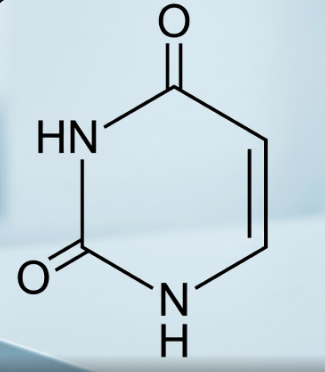
• When Urea is slowly heated, it decomposes to form a chemical compound known as biuret, accompanied by the release of ammonia gas.
• Upon adding dilute sodium hydroxide (NaOH) and a few drops of copper sulfate (CuSO4) solution, the biuret forms a complex with the Cu(II) ions, producing a characteristic violet or purple coloration known as the Biuret test.
Information Booster:
• Although named the biuret test, this specific reaction is the standard biochemical method used universally to detect the presence of peptide bonds in proteins.
• Urea (NH2CONH2) itself does not have a peptide bond but forms biuret upon heating, allowing it to give a positive response.
Additional Knowledge:
Benedict test (Option b)
• This test is chemically employed to detect the presence of reducing sugars (like glucose), changing color from blue to brick-red.
Lucas test (Option c)
• The Lucas test distinguishes between primary, secondary, and tertiary alcohols based on their reactivity with zinc chloride in concentrated HCl.
Mulliken test (Option d)
• Mulliken's test is primarily utilized in organic chemistry to detect the presence of nitro (-NO2) functional groups.
None of the above/More than one of the above (Option e)
• Incorrect, as the Biuret test is correctly associated with identifying heated urea.
So the correct answer is (a)
 English
 50 Questions
 200 Marks
 30 Mins