Correct option is D
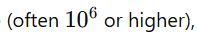
Option a is correct: Adequate sensitivity for an ideal detector is indeed in the range of

This ensures accurate detection of very small concentrations of the analyte.
Option b is correct: An ideal detector's response time is indeed short and should not depend on the flow rate of the carrier gas to provide consistent and accurate measurements.
Option c is correct: An ideal detector is non-destructive, meaning it does not chemically alter the sample, allowing for further analysis if needed.
Option d is incorrect: The linear response of an ideal detector should span a much broader range than a mere 10-fold change. Typically, a good detector provides a linear response over several orders of magnitude
enabling accurate quantification across a wide concentration range.
Information Booster
Gas chromatography (GC) is a common type of chromatography used in analytical chemistry for separating and analyzing compounds that can be vaporized without decomposition.
Gas chromatography is the process of separating compounds in a mixture by injecting a gaseous or liquid sample into a mobile phase, typically called the carrier gas, and passing the gas through a stationary phase. The mobile phase is usually an inert gas or an unreactive gas such as helium, argon, nitrogen or hydrogen. The stationary phase can be solid or liquid, although most GC systems today use a polymeric liquid stationary phase. The stationary phase is contained inside of a separation column. Today, most GC columns are fused silica capillaries with an inner diameter of 100–320 micrometres (0.0039–0.0126 in) and a length of 5–60 metres (16–197 ft). The GC column is located inside an oven where the temperature of the gas can be controlled and the effluent coming off the column is monitored by a suitable detector.
Commonly used detectors are the flame ionization detector (FID) and the thermal conductivity detector (TCD). While TCDs are beneficial in that they are non-destructive, its low detection limit for most analytes inhibits widespread use.