Correct option is A
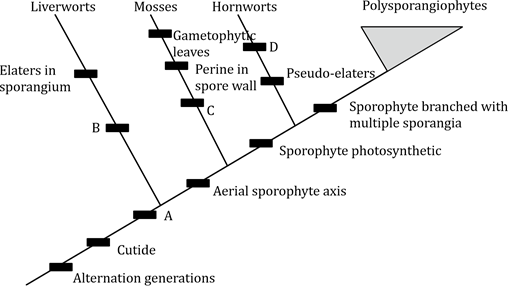
Correct Answer: (1) A-iii, B-ii, C-iv, D-i
Explanation:
A. Cuticle: The cuticle is a waxy layer that helps prevent water loss in plants, which is a key feature for terrestrial adaptation. This corresponds to apomorphy (iii): Morphological changes that take place with plant development. The cuticle is an important adaptation for plant survival on land, which is why it is linked to morphological development in plants.
B. Liverworts: Liverworts are characterized by the presence of oil bodies, which are specialized cells for storing hydrophobic substances like oils. This corresponds to apomorphy (ii): Oil bodies, which are typical of liverworts.
C. Mosses: Mosses possess pseudo-elaters, which help in the dispersal of spores. These are unique to mosses and related plants. This corresponds to apomorphy (iv): Organism with both male and female sex organs in the same flower. This matches the reproduction strategy of mosses, where both gametes are produced in the same structure.
D. Polysporangiophytes: Polysporangiophytes are advanced plants characterized by intercalary growth of the sporophyte, which allows for a more complex growth form. This corresponds to apomorphy (i): Intercalary growth of sporophyte, which reflects the advanced, branched growth seen in this group.
Information Booster:
Cuticle (A): The development of the cuticle allows plants to conserve water, which was crucial for their survival as they adapted to life on land. This trait marked a significant morphological change in plant development.
Oil bodies (B): Liverworts are known for having oil bodies, which help with the storage of lipids and other compounds. These oil bodies are characteristic of liverworts and some other non-vascular plants.
Pseudo-elaters (C): Mosses produce pseudo-elaters, which help with the dispersal of spores. These cells are distinct from true elaters found in some other plants and assist in spore release during wet conditions.
Intercalary growth of sporophyte (D): Polysporangiophytes have the capacity for intercalary growth, which enables the sporophyte to grow in a way that supports more complex structures, including the production of multiple sporangia.