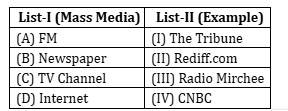
Correct option is B
The chronological order of the normative media theories is as follows:
- (C) Authoritarian theory: The earliest theory, which emphasized state control over the media. This theory was prominent in monarchies and autocratic systems where the press was seen as an instrument to serve the interests of the ruling class.
- (A) Libertarian theory: Developed in the 17th and 18th centuries, this theory advocated for freedom of speech and free press. It emphasized minimal government intervention, with the belief that the press should operate freely in serving the public good.
- (B) Soviet Media theory: This theory developed in the context of Marxist-Leninist ideology after the Russian Revolution and involved state-controlled media, where the media was used to promote socialist principles and defend the state.
- (D) Social responsibility theory: Developed in the 20th century, it is an evolution of libertarian theory. It calls for media freedom with ethical responsibilities, ensuring that the media serves the public interest, rather than being driven solely by profit.
Information Booster:
- Authoritarian theory: The earliest media theory that emphasized total control over media to ensure state security, often associated with monarchies or dictatorial regimes.
- Libertarian theory: Advocates for a free press and freedom of expression, aligning with democratic ideals where the government does not restrict media or suppress opinions.
- Soviet Media theory: This is based on the principles of Marxist-Leninist thought, where the media is controlled by the state and its function is to promote socialist ideals.
- Social responsibility theory: While it still supports media freedom, it stresses that the media has a duty to provide accurate and balanced information while serving the public interest.
 English
 10 Questions
 20 Marks
 12 Mins