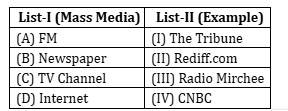
Correct option is B
In the digital media landscape, audience fragmentation refers to the division of media consumers into smaller, more specialized groups based on their preferences, behaviors, and online interactions. Unlike traditional mass media, where audiences receive uniform messages, digital media provides personalized and targeted content, leading to highly segmented audience groups.
- Digital media fragmentation occurs due to the vast number of online platforms, social networks, streaming services, and algorithm-driven content distribution.
- Users engage with specific content categories, forming niche communities based on interests, ideologies, and consumption patterns.
- Filter bubbles and echo chambers are a result of fragmentation, where audiences are exposed to information aligned with their existing views, reinforcing selective exposure.
- Advertisers and content creators tailor messages for segmented audiences, making digital media consumption highly personalized and interactive.
- Digital media allows for multi-platform engagement, where audiences consume content across different devices and formats.
Information Booster:
- Limited geographical area: Digital media is global and unrestricted, reaching audiences worldwide.
- Passive messages: Digital media is highly interactive, unlike traditional media, where audiences passively receive information.
- Identity crisis: While digital media influences identity perception, fragmentation is a more defining characteristic of audience behavior.
 English
 10 Questions
 20 Marks
 12 Mins