Correct option is A
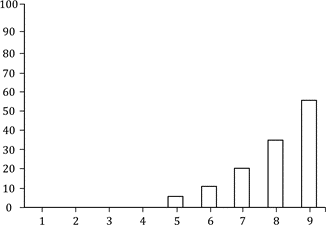
Genetic drift refers to the random fluctuation in allele frequencies from one generation to the next due to chance events, particularly in small populations. Over time, this random process can lead to a reduction in heterozygosity (heterozygous genotypes) and an increase in homozygosity (homozygous genotypes). This happens because alleles can be lost or fixed (become the only allele present at a locus) in a population by random sampling alone.
Let’s now explain why the other options are incorrect:
Option (2): Intense inbreeding: While inbreeding does result in an increase in homozygous genotypes (especially homozygous recessive genotypes), it is more specifically associated with mating between closely related individuals, not simply random mating. The process described in the question seems to refer to random mating, so inbreeding is not the primary cause of the observed genetic shift.
Option (3): Reverse mutation: Reverse mutation is a process where a gene that has mutated returns to its original form. This process does not cause a reduction in heterozygous genotypes or an increase in homozygous genotypes in the manner described in the question.
Option (4): Founder effect: The founder effect refers to a situation where a small number of individuals from a larger population establish a new population, often resulting in reduced genetic diversity. While this can cause genetic shifts, it doesn’t specifically describe the reduction of heterozygous genotypes in the context of random mating in the way the question implies.