






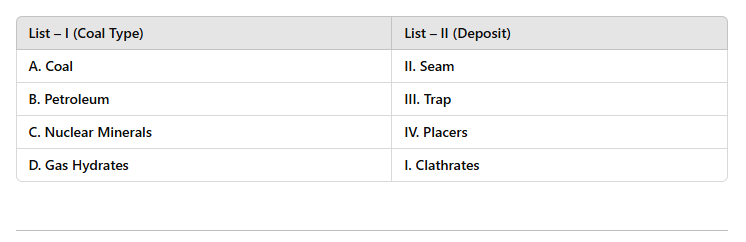
 Choose the correct answer:
Correct option is C
1. Coal – Seam (II):
· Coal is typically found in coal seams, which are layers or beds of coal formed over millions of years through the compression of plant material.
2. Petroleum – Trap (III):
· Petroleum is usually extracted from traps that hold oil and gas, formed due to geological structures like anticlines or faults.
3. Nuclear Minerals – Placers (IV):
· Some nuclear minerals, like uranium, are found in placer deposits where heavy minerals are concentrated by water action.
4. Gas Hydrates – Clathrates (I):
· Gas hydrates are trapped within ice-like structures known as clathrates, which occur under high-pressure, low-temperature conditions, typically in ocean sediments.
Information Booster:
1.
Coal Seams:
· Coal seams vary in thickness and can be mined through surface or underground methods.
2.
Petroleum Traps:
· Common types include
anticline traps, fault traps, and salt dome traps.
3.
Placer Deposits:
· Formed by
gravity separation in streams or beaches, often containing valuable minerals like
gold, uranium, and thorium.
4.
Clathrates:
· Also known as
methane hydrates, they are potential energy sources but challenging to exploit due to stability concerns.
Additional Knowledge:
·
Seam: Layered coal deposit in sedimentary rock.
·
Trap: Geological structure for oil and gas accumulation.
·
Placers: Deposits formed by sediment sorting.
·
Clathrates: Ice-like crystalline structures containing gas.
 English
 10 Questions
 20 Marks
 12 Mins


