
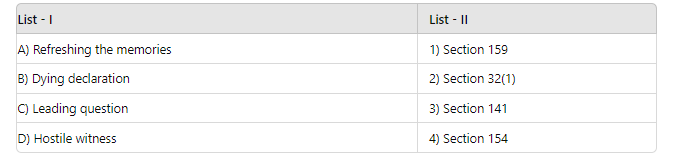
 Code :
Correct option is D
The correct answer is
(d) 1 2 3 4. Each provision of the
Indian Evidence Act, 1872 matches with the corresponding concepts from List-I, as explained below:
Explanation:
A) Refreshing the memories - Section 159
Under
Section 159 of the Indian Evidence Act, a witness is permitted to refresh their memory by referring to any document if they have made or verified it at the time of the transaction. This allows the witness to provide accurate testimony based on recollection with the help of written records.
B) Dying declaration - Section 32(1)
Section 32(1) refers to
dying declarations, which are statements made by a person regarding the cause of their death or the circumstances leading to their death, when the person is unable to testify due to their impending death. Such statements are admissible as evidence even though they are considered hearsay.
C) Leading question - Section 141
According to
Section 141, a
leading question is one that suggests the answer the party wants. Such questions are typically allowed during cross-examination but are restricted during the examination-in-chief unless the court permits.
D) Hostile witness - Section 154
Section 154 deals with
hostile witnesses. It allows the court to grant permission to the party who called the witness to ask them leading questions and cross-examine them if the witness shows hostility by giving adverse testimony.
Information Booster:
·
Refreshing memory (Section 159): This provision allows witnesses to refer to notes or documents to recall details.
·
Dying declaration (Section 32(1)): Dying declarations are exceptions to the hearsay rule, provided the statement relates to the cause of the declarant’s death.
·
Leading question (Section 141): Leading questions are typically disallowed during examination-in-chief but are allowed in cross-examination.


