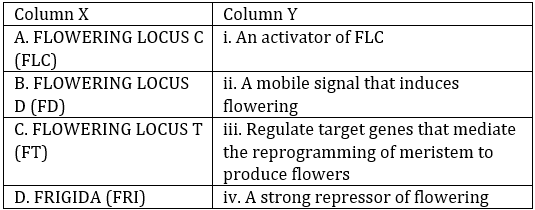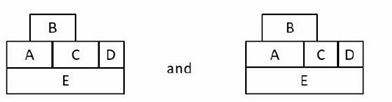
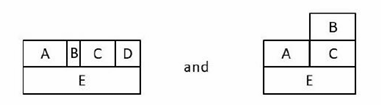
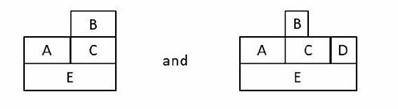
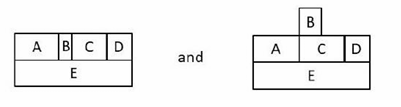
Correct option is B
The ABCDE model explains how different classes of genes interact to determine the formation of floral organs, including sepals, petals, stamens, and carpels. These genes work in combination as follows:
- A-class genes: Regulate sepal formation.
- A and B-class genes: Together, they define petal development.
- B and C-class genes: Cooperatively responsible for the formation of stamens (male reproductive organs).
- C-class genes: Essential for the formation of carpels (female reproductive organs).
- D-class genes: Play a role in ovule development.
- E-class genes: Necessary for overall floral organ identity across all whorls.
Formation of Unisexual Flowers
Unisexual flowers, which contain only male or female reproductive organs, develop when genes responsible for either stamen (male organs) or carpel (female organs) formation are either suppressed or altered.
Step-by-step Mechanism:
- If the B and C-class genes (which control stamen formation) are absent or suppressed, the plant will not develop male reproductive structures, resulting in a female (carpellate) flower.
- If the C-class genes (which control carpel formation) are absent, the plant will not develop female reproductive structures, leading to a male (staminate) flower.
Information Booster:
- The ABCDE model provides a framework for understanding how different gene classes interact to determine floral organ development.
- Unisexual flowers arise due to modifications in B or C-class gene functions, leading to the absence of either male or female reproductive structures.
- The traditional ABC model has been expanded to include D and E-class genes, which are essential for ovule formation and floral organ specification.
- D-class genes (e.g., SEEDSTICK, SHATTERPROOF) define ovule identity.
- E-class genes (e.g., SEPALLATA family) ensure proper floral meristem identity and are required for the development of all floral organs.