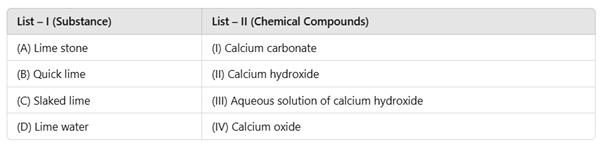
Correct option is B
Introduction:
- A Threshold Dose is the dose below which no adverse effects are observed. In a dose-response relationship, this is the point at which the biological response starts to manifest.
- Below the threshold dose, the body's natural defenses can manage the exposure, and no observable harm occurs.
Information Booster:
- Absorbed Dose: The quantity of a substance that actually enters the body and reaches the target tissue.
- Acceptable Daily Intake (ADI): The maximum amount of a substance that can be ingested daily over a lifetime without appreciable health risk.
- Toxicity Reference Dose (RfD): An estimate of a daily exposure to a human population that is likely to be without risk of harmful effects during a lifetime.
- Critical in determining safe levels of exposure.
- Commonly used in setting safety standards for chemicals and drugs.
- Absorbed Dose: Used in toxicology to measure the amount of chemical that enters the body.
- Expressed in units like mg/kg of body weight.
- Acceptable Daily Intake (ADI):
- Typically used for food additives and contaminants. Expressed in mg/kg body weight/day.
- Toxicity Reference Dose (RfD): Developed by agencies like the EPA.
- Includes safety margins to protect sensitive populations.
Additional Knowledge:
- Dose-Response Relationship: Represents the relationship between the dose of a substance and the magnitude of the biological response.
- NOAEL (No Observed Adverse Effect Level): The highest dose at which no adverse effects are seen.
- LOAEL (Lowest Observed Adverse Effect Level): The lowest dose at which adverse effects are observed.
- LD50 (Lethal Dose 50%): The dose that kills 50% of the test population.
 English
 10 Questions
 20 Marks
 12 Mins