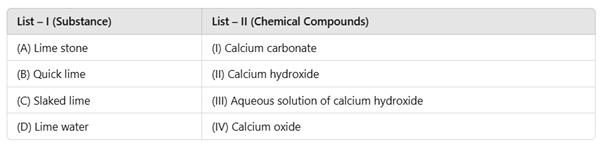
Correct option is D
Introduction
· Organic carbon measurement is a critical parameter in environmental monitoring used to assess the degree of pollution in water bodies and the efficiency of wastewater treatment processes.
· Different analytical techniques measure the oxygen required to stabilize organic matter or directly quantify the carbon atoms present in the sample.
· The choice of method depends on the required precision, the nature of the organic matter, and the time sensitivity of the monitoring task.
Information Booster
· TOC (Total Organic Carbon) is the fastest method because it utilizes high-temperature combustion or UV-persulfate oxidation to convert organic carbon into carbon dioxide ( within minutes.
· Unlike biological or chemical oxygen demand tests, TOC directly measures the carbon content using an infrared detector (NDIR), providing a result in typically 3 to 10 minutes.
· It is highly efficient for real-time monitoring and process control in industrial water treatment and high-purity water systems.
· The method is independent of the oxidation state of the organic matter and is not affected by the presence of inorganic reducing agents that often interfere with chemical tests.
· Modern TOC analyzers are fully automated, allowing for high sample throughput compared to traditional wet chemistry methods.
Additional Knowledge
· COD (Chemical Oxygen Demand) uses a strong chemical oxidizing agent (potassium dichromate) under acidic conditions to break down organic matter, usually taking about 2 to 3 hours to complete the reflux process.
· BOD5 (5-day Biochemical Oxygen Demand) is the standard biological test measuring the amount of dissolved oxygen consumed by microorganisms, but it is extremely slow as it requires a mandatory incubation period of 5 days.
· BOD7 refers to a 7-day variation of the biochemical oxygen demand test used in some European standards or specific research conditions, which makes it even slower than the standard 5-day protocol.
· While TOC is the fastest, it does not distinguish between biodegradable and non-biodegradable organic matter, which is why biological tests like BOD5 and BOD7 are still required to understand the ecological impact of waste on aquatic life.
 English
 10 Questions
 20 Marks
 12 Mins