Correct option is B
Line transect sampling is a widely used method for estimating animal population densities. It relies on a few fundamental assumptions to ensure unbiased and accurate estimation. Let's analyze each statement:
Statement A: "The probability of detection is independent of distance from the transect line."
- Incorrect. In reality, the probability of detecting an animal decreases as the distance from the transect line increases. This assumption does not hold in standard line transect sampling methods.
Statement B: "The animals in question are uniformly distributed throughout the study area."
- Incorrect. Animals may not always be uniformly distributed in the area. The method does not necessarily assume uniform distribution but rather considers an effective detection function.
Statement C: "The animals are deemed to be stationary and thus detected only once during the sampling."
- Correct. A key assumption in line transect sampling is that animals do not move significantly during the survey period, preventing double counting or missed detections due to movement.
Statement D: "Animals on the line will be detected with a probability equal to 1."
- Correct. This is a fundamental assumption in line transect sampling. If an animal is located directly on the transect line, it must be detected with certainty to avoid underestimating the population density.
Since statements C and D are correct assumptions of line transect sampling, the correct answer is option 2 (C and D).
Information Booster
Definition of Line Transect Sampling:
- A method used in wildlife surveys where observers move along a fixed transect line and record animals detected within a specified distance.
Purpose of Line Transect Sampling:
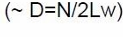
- It estimates population density using statistical models that relate the probability of detection to the distance from the transect line.
Detection Function in Line Transect Sampling:
- The probability of detecting an individual decreases as the distance from the line increases. This function is modeled statistically.
- The probability of detecting an individual decreases as the distance from the line increases. This function is modeled statistically.