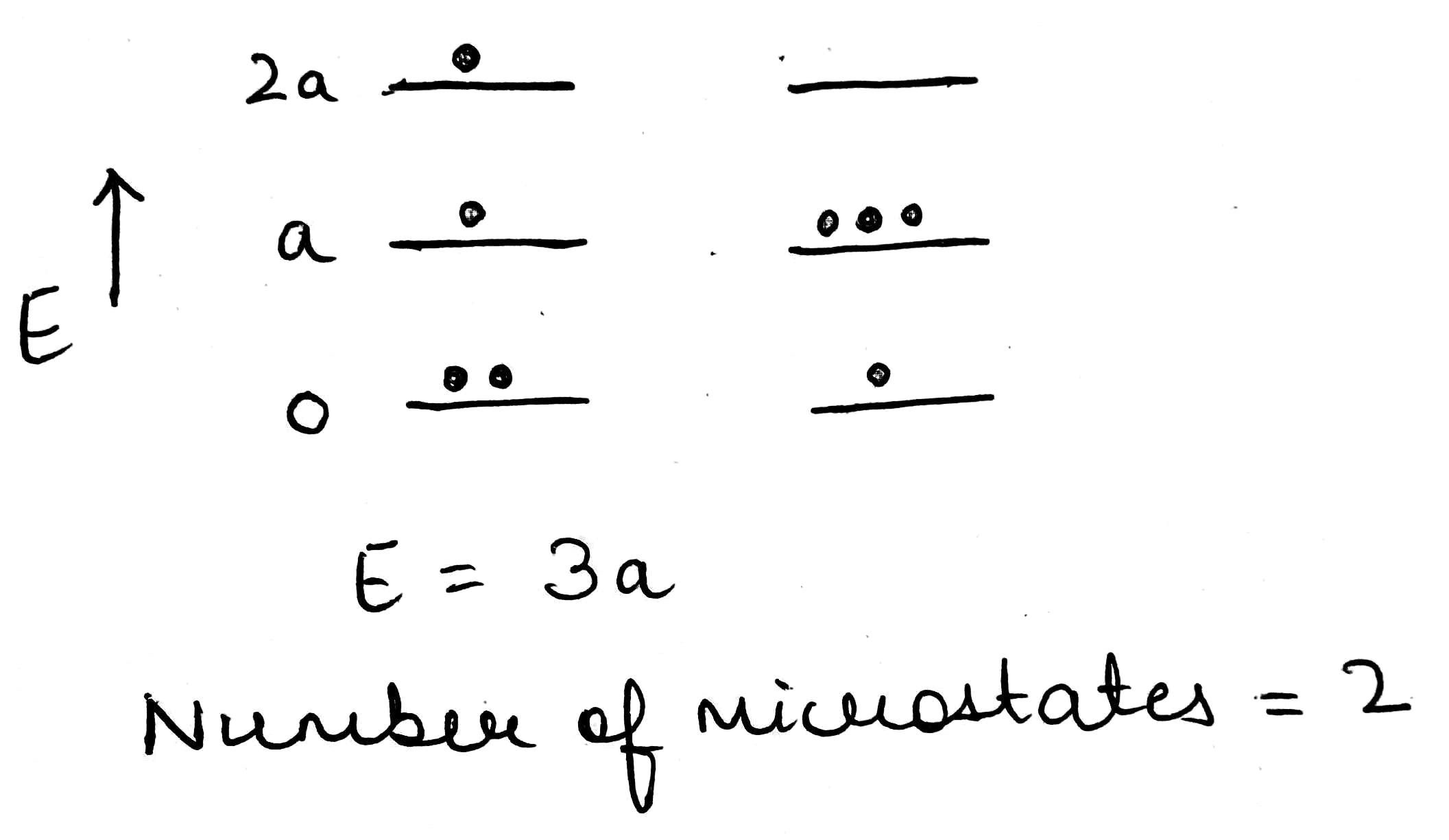
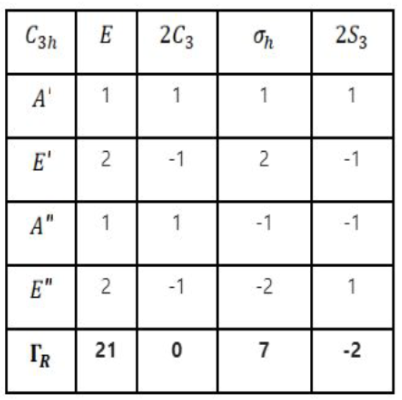
Correct option is C
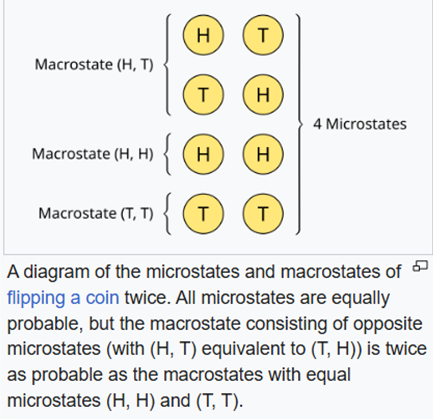
In statistical mechanics, a microstate is a specific configuration of a system that describes the precise positions and momenta of all the individual particles or components that make up the system. Each microstate has a certain probability of occurring during the course of the system's thermal fluctuations.
In contrast, the macrostate of a system refers to its macroscopic properties, such as its temperature, pressure, volume and density. Treatments on statistical mechanics define a macrostate as follows: a particular set of values of energy, the number of particles, and the volume of an isolated thermodynamic system is said to specify a particular macrostate of it. In this description, microstates appear as different possible ways the system can achieve a particular macrostate.
In quantum mechanics, indistinguishable particles (also called identical or indiscernible particles) are particles that cannot be distinguished from one another, even in principle. Species of identical particles include, but are not limited to, elementary particles (such as electrons), composite subatomic particles (such as atomic nuclei), as well as atoms and molecules.
There are two main categories of identical particles: bosons, which can share quantum states, and fermions, which cannot (as described by the Pauli exclusion principle). Examples of bosons are photons, gluons, phonons, helium-4 nuclei and all mesons. Examples of fermions are electrons, neutrinos, quarks, protons, neutrons, and helium-3 nuclei.
A boson is a subatomic particle whose spin quantum number has an integer value (0, 1, 2, ...). Bosons form one of the two fundamental classes of subatomic particle, the other being fermions, which have odd half-integer spin (1⁄2, 3⁄2, 5⁄2, ...).
The total spin of the helium-4 nucleus is an integer (zero), making it a boson.