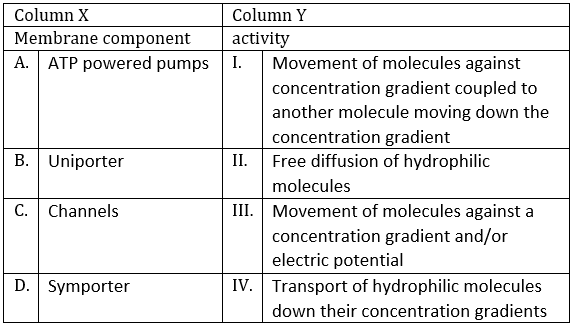
Correct option is B
EXPLANATION-
Option b : Cholera toxin causes the chloride channels in intestinal epithelial cells to open, resulting in massive chloride loss into the intestinal lumen. This chloride loss drags water along with it by osmosis, leading to severe dehydration. The principle of oral rehydration therapy is based on the sodium-glucose co-transport mechanism in the intestines. Glucose and sodium are co-transported together into epithelial cells via a specialized carrier protein.
This co-transport creates an osmotic gradient because the movement of sodium and glucose into epithelial cells pulls water from the intestinal lumen into the bloodstream.
Supplementing water with both glucose and salt (which contains sodium) ensures efficient absorption of water by utilizing this co-transport mechanism. This is the correct option.
Incorrect options-
Option a : While dehydration causes energy loss, the primary role of glucose in ORT is not to replenish energy but to facilitate sodium and water absorption.
Option c : There is no epithelial antiporter that pumps water directly. Water moves passively following osmotic gradients created by sodium and glucose transport.
Option d : Sodium chloride does not release chloride ions to replace those lost; instead, chloride is lost due to the toxin. ORT works by facilitating sodium and glucose absorption to drive water uptake, not by replacing chloride directly.