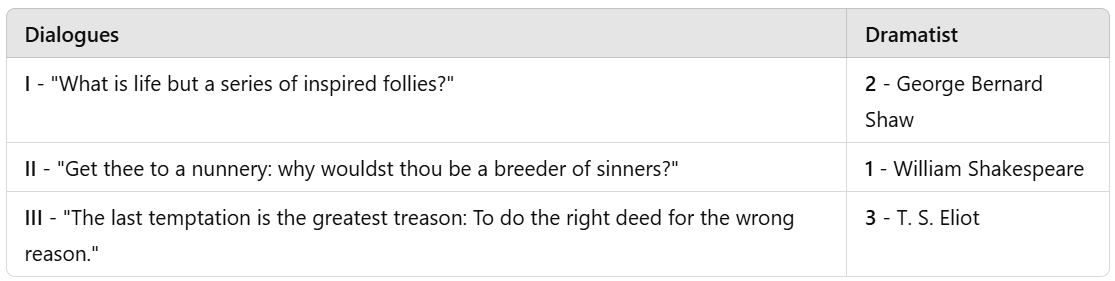
Correct option is B
Explanation:
Shylock: Appears in The Merchant of Venice by William Shakespeare (1600).
Shylock is a famous character, representing a Jewish moneylender in Shakespeare's tragicomedy.
Sir Epicure Mammon: Appears in The Alchemist by Ben Jonson (1610).
This satirical character is known for his greed and alchemical ambitions. It was performed by King's men.
Mirabell: Appears in The Way of the World by William Congreve (1700).
A central figure in this Restoration comedy of manners.
Jimmy Porter: Appears in Look Back in Anger by John Osborne (1956).
A modern protagonist known for his disillusionment in post-war Britain.
Information Booster:
The Alchemist (1610) – Ben Jonson
- A satirical comedy set in London, where three con artists—Face, Subtle, and Doll Common—trick gullible people by pretending to have alchemical powers.
- Sir Epicure Mammon is a wealthy man obsessed with gaining the philosopher’s stone to turn metal into gold. His greed makes him an easy target for the con artists.
The Merchant of Venice (1596-1599) – William Shakespeare
- A tragicomedy that explores themes of justice, mercy, and prejudice. It revolves around a merchant, Antonio, who borrows money from Shylock, a Jewish moneylender, under a harsh contract.
- Shylock is one of Shakespeare’s most famous and controversial characters, representing themes of revenge, discrimination, and justice.
The Way of the World (1700) – William Congreve
- A Restoration comedy known for its witty dialogue and critique of upper-class society. The play follows the romantic schemes of Mirabell and his attempt to marry Millamant while securing her inheritance.
- Mirabell is a clever and charming protagonist who navigates the deceitful world of aristocratic society with wit and intelligence.
Look Back in Anger (1956) – John Osborne
- A powerful play of the "Angry Young Men" movement, portraying post-war disillusionment in Britain.
- Jimmy Porter is a frustrated intellectual who lashes out against society and his wife, symbolizing working-class struggles and class resentment.
 English
 10 Questions
 20 Marks
 12 Mins