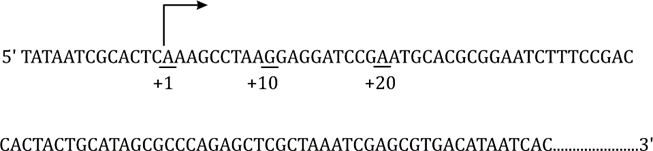
Correct option is A
The correct option is (a)
EXPLANATION-
Protein synthesis starts normally on free ribosomes in the system.
Due to low SRP concentration, there is inefficient targeting of the ribosome to ER membranes.
Due to Triton X-100 disruption, ER membranes cannot properly accept or translocate the nascent chain.
This leads to premature termination of translation, yielding shorter (incomplete) proteins instead of full-length ones.
Incorrect options-
OPTION (b) - The ER membranes have been treated with 1% Triton X-100, which is a detergent that disrupts the membrane structure.
This disruption destroys the ER’s ability to form functional translocons and prevents ribosomes from docking and translocating the nascent protein into the ER lumen.
Therefore, the protein cannot be properly incorporated into the ER, making this option highly unlikely.
OPTION (c) - Signal sequence removal requires signal peptidase, an enzyme that is tightly associated with the ER membrane. Since Triton X-100 disrupts the ER membrane, the signal peptidase is either inactivated or lost.
Without functional ER membranes, the signal sequence cannot be cleaved properly. Additionally, translocation into the ER lumen (where cleavage occurs) does not happen.
Hence, the signal sequence is most likely retained, making this option incorrect.
OPTION (d) - Although this option seems plausible at first glance, complete synthesis of the protein is unlikely under the given conditions.
The low concentration of SRP combined with disrupted ER membranes typically leads to inefficient targeting and translocation, causing stalling or premature termination of translation.
Therefore, the protein is not fully synthesized and remains incomplete or truncated, making this option incorrect for this specific experiment.