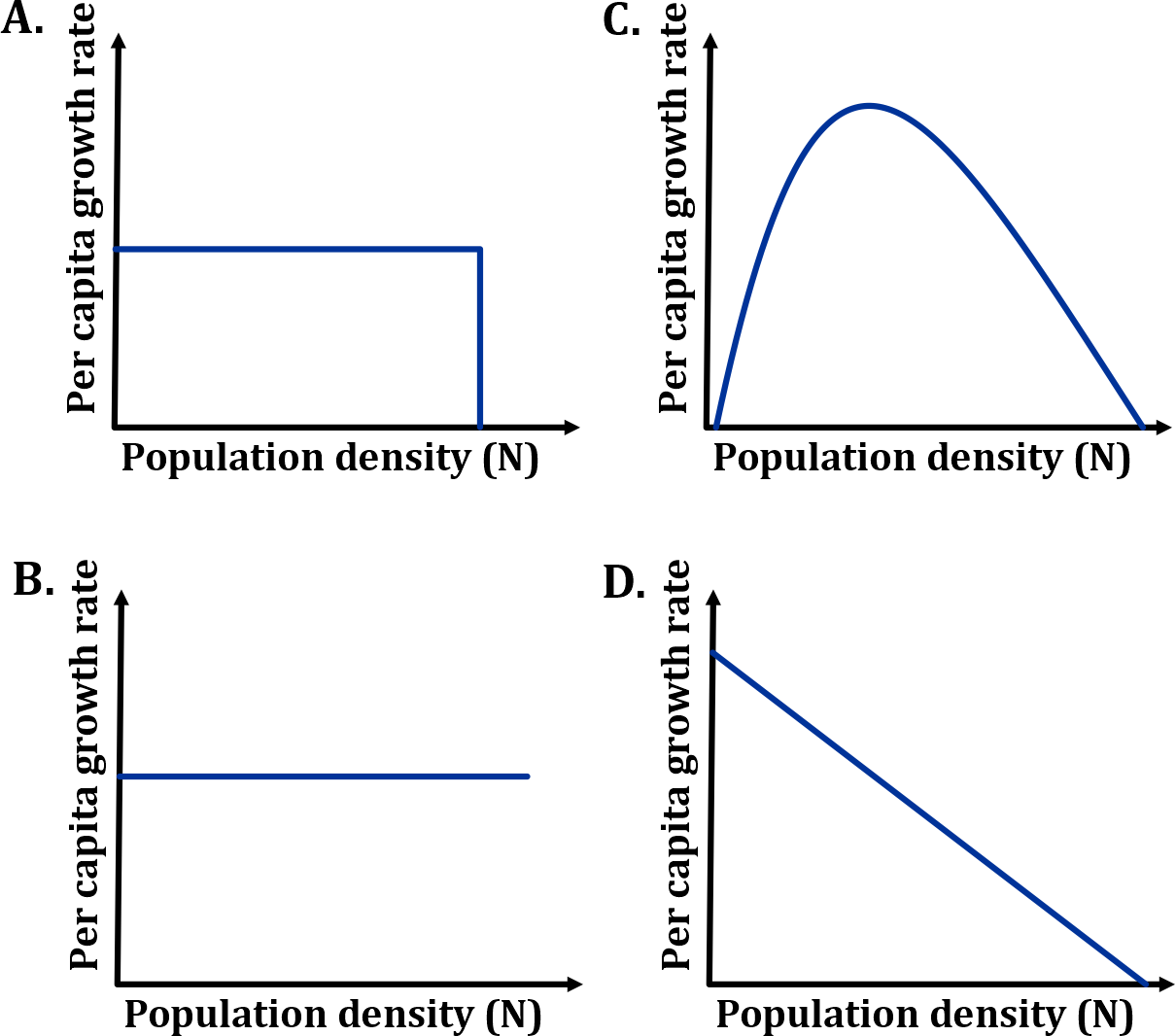
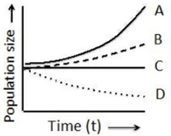
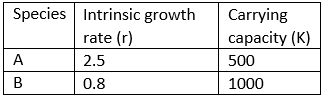
Correct option is C
The correct answer is option (3): Uniform.
Explanation:
In this scenario, the tree species produces an allelochemical compound that inhibits the growth of its own seedlings. This means that the adult trees are likely to be spaced more evenly across the landscape to avoid the buildup of these toxic compounds near each other.
Allelopathy is a biological phenomenon where one plant species produces chemicals that harm or inhibit the growth of other plants, often of the same species. In this case, the adult trees are likely to be spaced out in a uniform pattern to reduce competition with their own offspring, as the allelochemicals they produce will prevent seedlings from growing near them.
Uniform dispersion is the result of competition or chemical inhibition between individuals of the same species, which leads to evenly spaced distribution.
Why the other options are incorrect:
Option (1) Random: A random dispersion pattern typically occurs in situations where individuals are independent of one another and there are no significant factors influencing their placement. However, in this case, the chemical compounds produced by the trees create an inhibitory effect on seedling growth, which leads to a more structured spacing, not a random one.
Option (2) Clumped: A clumped dispersion pattern occurs when resources or environmental factors are unevenly distributed, leading individuals to cluster around favorable conditions. However, in this case, the allelochemical compounds discourage seedlings from growing close to adult trees, so a clumped pattern is unlikely.
Option (4) Bimodal: A bimodal dispersion pattern refers to two distinct groups of individuals in separate locations. This pattern does not match the scenario described, as there is no indication of two separate, non-overlapping clusters of trees. Instead, the trees would be spaced out in a uniform manner due to the inhibitory effect of the allelochemicals.