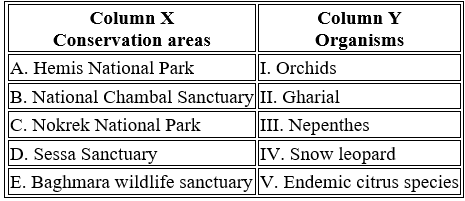
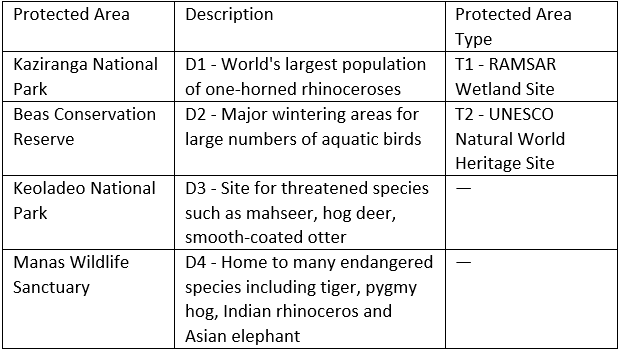
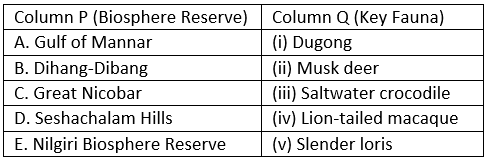
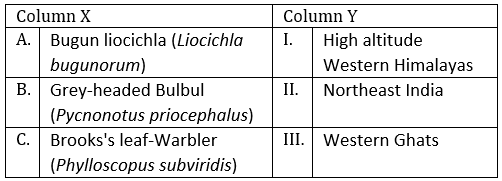
Correct option is D
The Bar-headed Goose (Anser indicus) is one of the highest-flying migratory birds, known for its incredible migration across the Himalayas. Every year, these birds migrate from their breeding grounds in Central Asia, Mongolia, and Tibet to India for the winter, flying at extreme altitudes of over 7,000 meters (23,000 feet) to cross the Himalayan range.
Key Adaptations for High-Altitude Migration:
- Efficient Oxygen Utilization – Their hemoglobin has a high affinity for oxygen, allowing them to survive in low-oxygen conditions.
- Larger Lungs and Heart – Enhanced respiratory and cardiovascular systems support flight at high altitudes.
- Energy Conservation – They use tailwinds and updrafts to reduce energy expenditure during migration.
- Thermal Regulation – Their feathers provide insulation against extreme cold in high-altitude environments.
Additional Information
Option (1) Sarus Crane (Incorrect):
- Resident bird of wetlands in India, Southeast Asia, and Australia.
- Does not migrate across the Himalayas.
Option (2) Red-vented Bulbul (Incorrect):
- Non-migratory songbird found in India, Southeast Asia, and the Middle East.
- Does not undertake long-distance migration.
Option (3) Jacobin Cuckoo (Incorrect):
- Known for monsoon migration, arriving in India before the monsoon season.
- It does not migrate across the Himalayas.