






Correct option is A
·
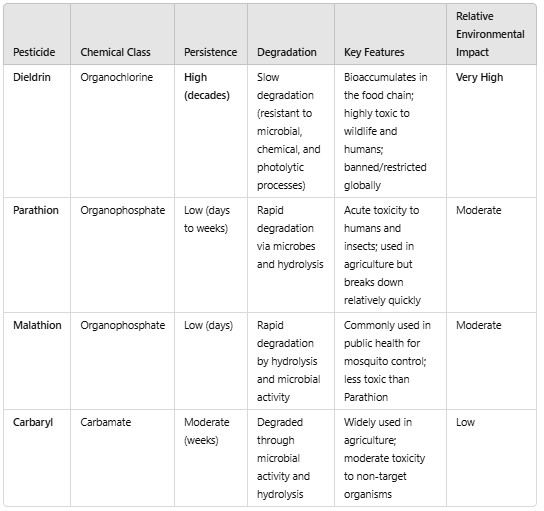
Persistence in the environment refers to the duration a pesticide remains active and intact without breaking down. Persistent pesticides are often resistant to environmental degradation through chemical, biological, or photolytic processes.
1.
Dieldrin:
· Dieldrin is an organochlorine pesticide known for its extreme persistence in the environment. It can remain in soil and water for decades, bioaccumulate in the food chain, and cause long-term ecological harm.
Information Booster: ·
Persistent Organic Pollutants (POPs): Dieldrin is classified as a POP under the Stockholm Convention, due to its persistence, bioaccumulation potential, and toxicity.
· Persistent pesticides like dieldrin were widely used but later banned or restricted in many countries because of their long-term environmental and health impacts.
Additional Knowledge: ·
Parathion and Malathion: These organophosphates are more toxic to humans but degrade rapidly, reducing their environmental persistence.
·
Carbaryl: Commonly used in agriculture, it has moderate toxicity but does not persist significantly in the environment.
 English
 10 Questions
 20 Marks
 12 Mins


