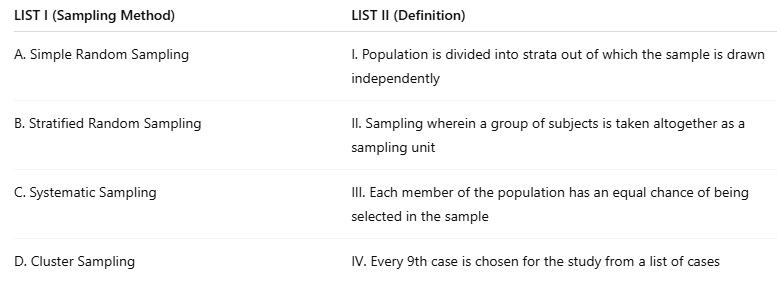
Correct option is B
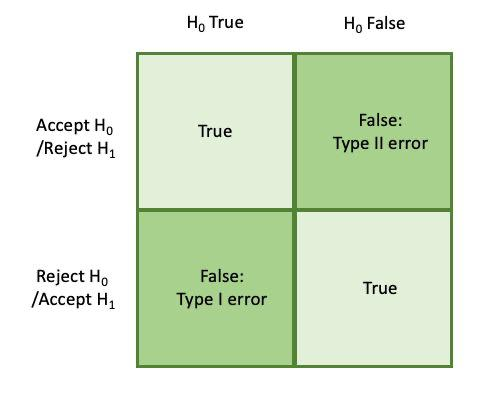
Rejecting the null hypothesis when it is actually true is known as a
Type I error, also referred to as an
Error of Commission. This type of error occurs when a researcher concludes that there is an effect or difference, when in fact, there is none. It is essentially a false positive, where the researcher falsely detects a significant result due to random chance or sampling variability.
Information Booster: In statistical hypothesis testing, the null hypothesis typically states that there is no effect or no difference between groups. A Type I error occurs when this true null hypothesis is incorrectly rejected. The probability of committing a Type I error is denoted by alpha (α), often set at 0.05, meaning there is a 5% chance of wrongly rejecting the null hypothesis. Researchers aim to minimize this error to ensure the reliability of their conclusions.
Additional Knowledge:
·
Type II error (Error of Omission): Happens when the null hypothesis is false, but the researcher fails to reject it—this is a false negative.
·
Error of Commission: Involves taking an incorrect action, such as rejecting a true null hypothesis (Type I error).
·
Error of Omission: Involves failing to take an action, such as not rejecting a false null hypothesis (Type II error).
 English
 10 Questions
 20 Marks
 12 Mins