Correct option is D
Expenditure + Savings = Income
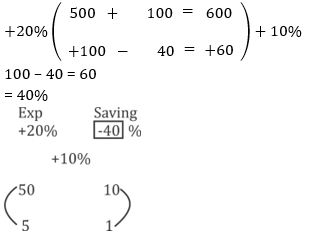

Expenditure + Savings = Income
 English
 80 Questions
 160 Marks
 60 Mins English English20 Questions40 Marks25 Mins English English150 Questions450 Marks135 Mins English
The monthly incomes of two friends David and Ashish, are in the ratio 5 : 8, respectively, and each of them saves ₹81,000 every month. If the ratio of their monthly expenditure is 2 : 4, find the monthly income of David (in ₹).
The monthly incomes of two friends David and Ashish, are in the ratio 5 : 8, respectively, and each of them saves ₹81,000 every month. If the ratio of their monthly expenditure is 2 : 4, find the monthly income of David (in ₹).
The income of Raman is ₹83,000. He saves 16% of his income. If his income increases by 22% and expenditure increases by 25%, then his savings will:
Raghu’s ratio of income to expenditure is 2 : 1. His income increased by 30% and expenditure decreased by 10%. If the initial expenditure was ₹35,000, find his final saving (in ₹).
The income of Raman is ₹91,700. He saves 20% of his income. If his income increases by 19% and expenditure increases by 35%, then his savings will:
The income of Raman is ₹43,500. He saves 17% of his income. If his income increases by 18% and expenditure increases by 20%, then his savings will:
The income of Raman is ₹68,800. He saves 18.5% of his income. If his income increases by 17% and expenditure increases by 25%, then his savings will:
A man's income increases by 21% and his expenditure increases by 9%. If his initial income was ₹45,000 and expenditure ₹27,000, find the percentage increase in savings.
The ratio of the income to the expenditure of a town is 7:6. If the income is ₹3500, what is the saving?
If due to 10% decrease in the price of sugar, Ram can buy 5 kg more sugar in ₹ 100 , then the actual price of the sugar (in ₹) per kg is


Suggested Test Series

Suggested Test Series
The monthly incomes of two friends David and Ashish, are in the ratio 5 : 8, respectively, and each of them saves ₹81,000 every month. If the ratio of their monthly expenditure is 2 : 4, find the monthly income of David (in ₹).
The monthly incomes of two friends David and Ashish, are in the ratio 5 : 8, respectively, and each of them saves ₹81,000 every month. If the ratio of their monthly expenditure is 2 : 4, find the monthly income of David (in ₹).
The income of Raman is ₹83,000. He saves 16% of his income. If his income increases by 22% and expenditure increases by 25%, then his savings will:
Raghu’s ratio of income to expenditure is 2 : 1. His income increased by 30% and expenditure decreased by 10%. If the initial expenditure was ₹35,000, find his final saving (in ₹).
The income of Raman is ₹91,700. He saves 20% of his income. If his income increases by 19% and expenditure increases by 35%, then his savings will:
The income of Raman is ₹43,500. He saves 17% of his income. If his income increases by 18% and expenditure increases by 20%, then his savings will:
The income of Raman is ₹68,800. He saves 18.5% of his income. If his income increases by 17% and expenditure increases by 25%, then his savings will:
A man's income increases by 21% and his expenditure increases by 9%. If his initial income was ₹45,000 and expenditure ₹27,000, find the percentage increase in savings.
The ratio of the income to the expenditure of a town is 7:6. If the income is ₹3500, what is the saving?
If due to 10% decrease in the price of sugar, Ram can buy 5 kg more sugar in ₹ 100 , then the actual price of the sugar (in ₹) per kg is
