arrow
arrow
arrow
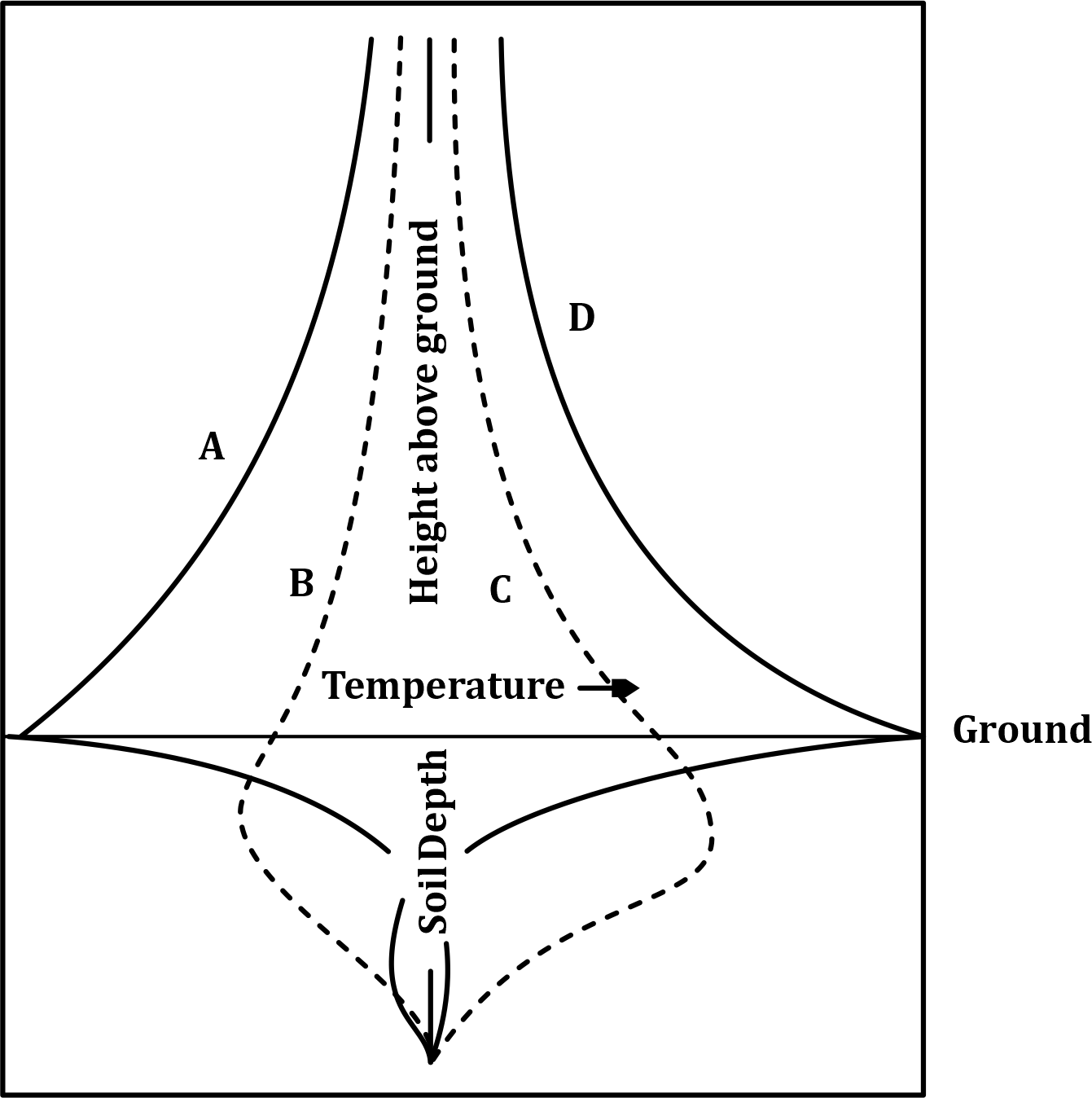
​The microclimate at the ground level is very important to plant life. Each curve (A-D) in the diagram below shows the temperature profiles collected
Question

The microclimate at the ground level is very important to plant life. Each curve (A-D) in the diagram below shows the temperature profiles collected above and below the bare ground (non-vegetated) shown with respect to the distance from the ground level (at different times over a 24-hour period).

Consider the following four different time points within a diel period (i-iv).i. Immediately after sunrise ii. noon iii. Immediately before sunset iv. Midnight. Match the temperature profiles with the correct diel period.

A.

a-i, b-iv, c-iii, d-ii

B.

a-iv, b-i, c-iii, d-ii

C.

a-i, b-iv, c-ii, d-iii

D.

a-iv, b-i, c-ii, d-iii

Correct option is B

Explanation-

Understanding the Graph:
Each curve (A–D) shows temperature profiles at different times during a 24-hour diel cycle above and below ground.
Horizontal axis = Temperature
Vertical axis = Distance from the ground (above or below)
The shape of the curve tells us about the temperature gradient during a specific time of day.
Analyze each curve and time point:
A → iv. Midnight
Observation: Curve A shows the lowest temperatures above and below ground. The surface has cooled the most, and soil has lost much of its heat. This is consistent with midnight, when the earth radiates heat and no solar input exists.
B → i. Immediately after sunrise
Observation: A slight temperature increase near the ground surface, but upper layers are still cold. Heat has just started entering the atmosphere and ground surface. The temperature gradient is steep only near the ground.
C → iii. Immediately before sunset
Observation: Moderately high temperatures both above and below ground. But less than peak (noon) because the sun is setting and cooling has begun.
D → ii. Noon
Observation: This profile shows the maximum surface and near-surface temperatures. Heat penetrates above and below the ground. Represents strong solar radiation during midday.

Correct answer - a-iv, b-i, c-iii, d-ii (Option b)
Similar Questions

test-prime-package

Access ‘CSIR NET Life Sciences’ Mock Tests with

  • 60000+ Mocks and Previous Year Papers
  • Unlimited Re-Attempts
  • Personalised Report Card
  • 500% Refund on Final Selection
  • Largest Community
students-icon
354k+ students have already unlocked exclusive benefits with Test Prime!
test-prime-package

Access ‘CSIR NET Life Sciences’ Mock Tests with

  • 60000+ Mocks and Previous Year Papers
  • Unlimited Re-Attempts
  • Personalised Report Card
  • 500% Refund on Final Selection
  • Largest Community
students-icon
354k+ students have already unlocked exclusive benefits with Test Prime!
Our Plans
Monthsup-arrow