Correct option is B
Concept:
· A polygon is a closed figure with straight sides. Examples of polygons are triangles, quadrilaterals, pentagons, hexagons, and so on.
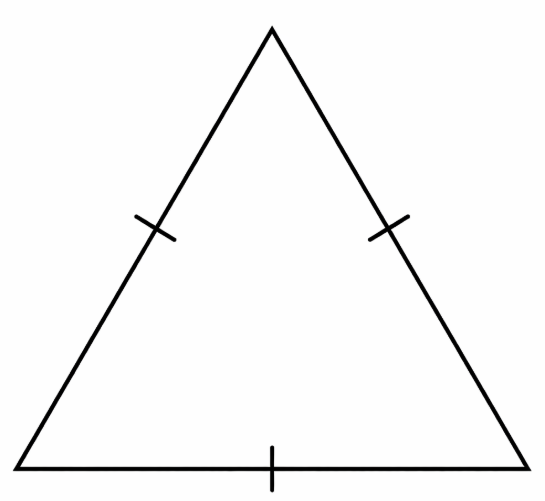
· If you take a polygon, say, a triangle, you'll notice that it has three angles. The sum of the internal angles of a triangle is always 180 degrees. Now, if you add a side to the triangle and make it a quadrilateral, you can see that it can be divided into two triangles. Therefore, the sum of internal angles in a quadrilateral is
180×2 = 360 degrees.
· Every time you add a side (and therefore form an additional triangle), you're adding another 180 degrees to the sum of the internal angles.
· This is what the formula (n-2) × 180, where 'n' is the number of sides, represents.
Solution:
The sum of all the internal angles of a polygon can be found using the formula (n−2) × 180 degrees, where n is the number of sides.
For an octagon, which has eight sides, the sum of all the internal angles is
(8−2) × 180 = 6 × 180 = 1080 degrees
Conclusion: The sum of all internal angles of a regular octagon is
1080 degrees.