






Correct option is A
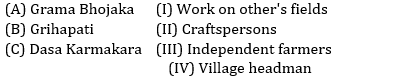
Correct Answer: (A) A–IV, B–III, C–I
Explanation:
(A) Grama Bhojaka → (IV) Village headman
Grama Bhojaka was the main village head in North Indian villages. He collected taxes, maintained law and order, and often held administrative control over village affairs.
(B) Grihapati → (III) Independent farmers
Grihapati refers to the head of a household, generally a landowning farmer. Such people managed their own agricultural land and were considered independent cultivators in the village economy.
(C) Dasa Karmakara → (I) Work on other’s fields
Dasa Karmakara were labourers or workers who worked on the fields of others. They were dependent on landowners for employment and wages.
Information Booster:
- These terms are found in early Indian historical sources describing rural society and village administration.
- The Grama Bhojaka held a powerful position and sometimes had hereditary rights over land and authority.
- Grihapatis formed an important productive class because they owned land and contributed to village revenue.
- Dasa Karmakaras were part of the dependent labour class and played a key role in agricultural work.
- Such village-based social structure shows clear division between landowners, administrators, and labourers.
 English
 150 Questions
 150 Marks
 150 Mins


