






Correct option is D
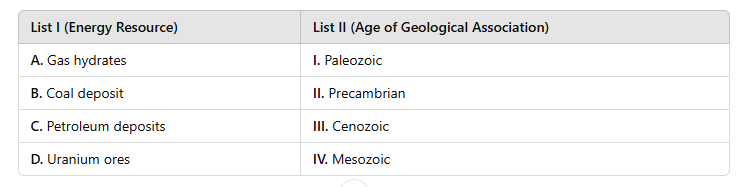
1. A. Gas Hydrates – Cenozoic (III):
· Gas hydrates are typically associated with the Cenozoic Era, where they form in young sediments under cold temperatures and high-pressure conditions, often on continental margins.
2. B. Coal Deposits – Paleozoic (I):
· Major coal deposits originated during the Carboniferous Period of the Paleozoic Era, characterized by extensive swampy forests that eventually transformed into coal.
3. C. Petroleum Deposits – Mesozoic (IV):
· Most petroleum deposits formed in the Mesozoic Era due to the burial and transformation of organic material under specific temperature and pressure conditions in marine environments.
4. D. Uranium Ores – Precambrian (II):
· Uranium ores, such as those found in the Athabasca Basin in Canada, are primarily associated with Precambrian rocks, particularly within ancient shield regions.
Information Booster: 1. Geological Time Scale:
· Precambrian: ~4.6 billion to 541 million years ago (oldest rocks, uranium ores).
· Paleozoic: 541 to 252 million years ago (coal-forming swampy forests).
· Mesozoic: 252 to 66 million years ago (petroleum deposits in marine basins).
· Cenozoic: 66 million years ago to present (young sediments and gas hydrates).
2. Energy Resource Formation:
· Coal: Formed from plant material in swampy conditions, buried and converted over millions of years.
· Petroleum: Derived from microscopic organisms in marine sediments, transformed under pressure and heat.
· Gas Hydrates: Methane trapped in crystalline water ice, found in modern cold marine environments.
· Uranium Ores: Found in ancient shields and rocks formed during Earth's early history.
3. Global Examples:
· Coal: Appalachian Basin (USA), Gondwana basins (India).
· Petroleum: Middle East, North Sea.
· Gas Hydrates: Indian Ocean margins, Arctic regions.
· Uranium Ores: Athabasca Basin (Canada), Singhbhum Craton (India).
 English
 10 Questions
 20 Marks
 12 Mins


