






 Code -
Correct option is D
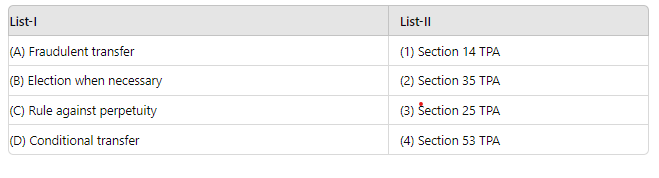
Fraudulent transfer is dealt with under Section 53 of the Transfer of Property Act, 1882 (TPA). It covers situations where a property transfer is made to defeat or delay creditors.
· Election when necessary is covered under Section 35 of TPA. It involves a situation where a person is put to election to either take a benefit under an instrument or to reject it.
· Rule against perpetuity is governed by Section 14 of TPA. This rule ensures that property cannot be tied up indefinitely beyond a certain period, promoting the free alienation of property.
· Conditional transfer is governed by Section 25 of TPA. It deals with the transfer of property that depends on the fulfillment of a condition.
Information Booster:
1. Section 53 TPA: A transfer made with the intent to defeat or delay creditors is voidable at the option of such creditors. This provision protects creditors from fraudulent transfers by the debtor.
2. Section 35 TPA: This section introduces the doctrine of election where a person has to choose between two rights under a document. They cannot accept one and reject the other.
3. Section 14 TPA: The rule against perpetuity restricts the creation of future interests that could potentially last indefinitely. This ensures that property remains transferable and does not remain inalienable for too long.
4. Section 25 TPA: Conditional transfers are those where the transfer of property depends upon the fulfillment or non-fulfillment of a condition by the transferee or transferor.
5. Transfer of Property Act, 1882: It regulates the transfer of property in India and lays down the rules regarding the same.
Additional Information:
· Section 14: This section stipulates that no interest in property can be created to take effect after the lifetime of one or more living persons at the time of the transfer plus 18 years. This prevents indefinite restrictions on the transfer of property.
· Section 25: If the condition in a transfer is void, the transfer itself may fail unless the condition is severable from the transfer.
· Section 35: When a transferor grants a benefit to a transferee, the transferee must choose to either accept the benefit and any attached burdens or reject both. This is based on the principle of equity.
· Section 53: The law empowers creditors to challenge transactions that are fraudulent. It is a safeguard to ensure that debtors cannot evade liability by making transfers to third parties.


