






Correct option is C
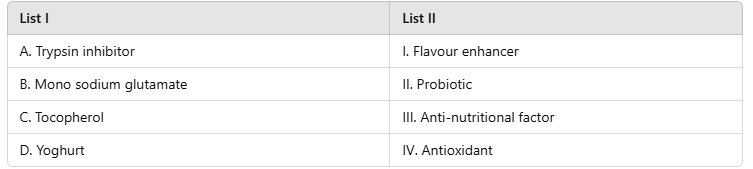
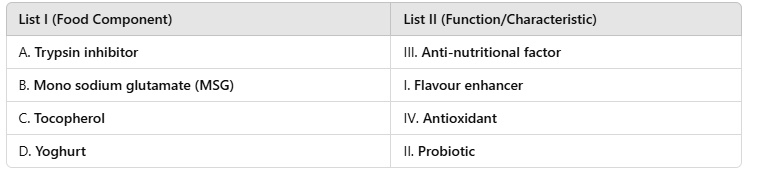
This question tests your knowledge of food components and their classifications. Let’s match List I (food components) with List II (their functions or characteristics):
1. Trypsin inhibitor → Anti-nutritional factor (III)
· Trypsin inhibitors are compounds found in legumes (such as soybeans) that interfere with protein digestion by inhibiting the enzyme trypsin, which is essential for breaking down proteins in the digestive system.
· Since they reduce the nutritional value of food, they are classified as anti-nutritional factors.
2. Mono sodium glutamate (MSG) → Flavour enhancer (I)
· MSG is a widely used flavor enhancer in processed and restaurant foods, particularly in Asian cuisine.
· It provides an umami (savory) taste, making food more palatable.
3. Tocopherol → Antioxidant (IV)
· Tocopherol is another name for Vitamin E, which is a powerful antioxidant.
· Antioxidants help prevent cell damage by neutralizing harmful free radicals in the body, thus protecting against aging and various diseases.
4. Yoghurt → Probiotic (II)
· Yoghurt contains probiotics, which are beneficial bacteria such as Lactobacillus and Bifidobacterium.
· Probiotics promote gut health by improving digestion and boosting the immune system.
Why These Matches Are Correct?
1. Trypsin Inhibitor (Anti-Nutritional Factor)
· Found in raw legumes, it reduces protein absorption. Cooking or fermentation can help reduce its effects.
2. Mono Sodium Glutamate (Flavor Enhancer)
· Commonly used in instant noodles, snacks, and soups to enhance taste.
· It stimulates taste receptors, making food more savory.
3. Tocopherol (Antioxidant)
· Protects cells from oxidative stress, which can lead to aging and chronic diseases.
· Found in foods like nuts, seeds, and vegetable oils.
4. Yoghurt (Probiotic)
· Aids digestion and improves gut microbiota balance.
· Regular consumption can boost immunity and digestive health.
 English
 10 Questions
 20 Marks
 12 Mins


