







Correct option is D
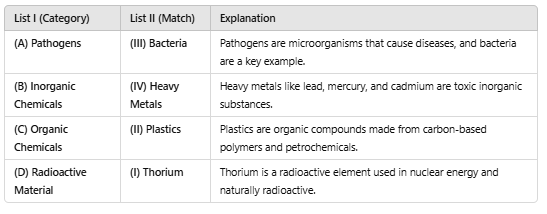
Information booster:
1. Pathogens (Bacteria):
· Pathogens include bacteria, viruses, fungi, and protozoa, which cause diseases like cholera, tuberculosis, and typhoid.
· Bacteria are single-celled microorganisms, and not all bacteria are harmful—many are essential for nutrient cycling and digestion.
· Common examples of pathogenic bacteria include E. coli and Salmonella.
2. Inorganic Chemicals (Heavy Metals):
· Heavy metals, such as lead (Pb), mercury (Hg), and arsenic (As), are non-biodegradable and persist in the environment.
· These metals are toxic even at low concentrations and can accumulate in living organisms through bioaccumulation.
· They often contaminate water sources through industrial discharge and mining activities.
3. Organic Chemicals (Plastics):
· Plastics are synthetic organic materials made from hydrocarbons such as ethylene and propylene.
· While plastics are versatile and widely used, they are non-biodegradable and cause severe environmental pollution.
· Microplastics, tiny plastic particles, are increasingly found in water bodies, posing threats to marine life.
4. Radioactive Material (Thorium):
· Thorium is a naturally occurring radioactive element used in advanced nuclear reactors.
· It has a long half-life and is less hazardous than uranium or plutonium.
· Thorium-based reactors are being explored for safer and cleaner nuclear energy solutions.
 English
 10 Questions
 20 Marks
 12 Mins


