






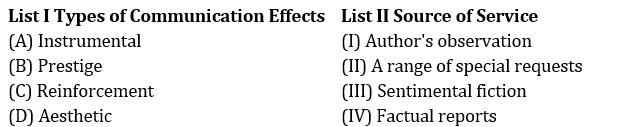
Correct option is C
(A) Instrumental – Factual Reports (IV):
(A) Instrumental Communication refers to communication aimed at accomplishing a specific goal, such as providing factual, practical, or useful information to solve problems or make decisions.
Factual Reports (IV) are a primary source of instrumental communication because they present objective data or evidence, which can be used to take action or make informed decisions. For instance, news reports, scientific reports, and research findings provide instrumental communication to achieve practical outcomes.
(B) Prestige – Sentimental Fiction (III):
(B) Prestige Communication relates to creating or enhancing one’s social standing, authority, or respect. Prestige often comes from an emotional connection or influence over others.
Sentimental Fiction (III), such as novels or emotional narratives, can raise an individual's status or prestige by resonating with readers on an emotional level. Such fiction often shapes societal views, enhances the appeal of certain ideologies or people, and gains prestige through its widespread influence or literary merit.
(C) Reinforcement – Special Requests (II):
(C) Reinforcement Communication involves affirming or strengthening existing beliefs, attitudes, or behaviors. This can be accomplished through repetition, follow-up messages, or appeals designed to encourage a specific action.
Special Requests (II) serve as tools for reinforcement. For instance, repeated appeals for donations or behavioral prompts in marketing can reinforce a particular message, ensuring that the audience is more likely to act in the desired way. Special requests such as calls to action can strengthen commitment to a cause or behavior.
(D) Aesthetic – Author's Observation (I):
(D) Aesthetic Communication pertains to communication that values beauty, form, and artistic expression. This type of communication appeals to the senses and emotions rather than being purely practical or functional.
Author's Observation (I) aligns with aesthetic communication because it reflects personal, subjective insights and descriptions that may not serve a practical purpose but instead offer beauty or artistic value. Writers often use their observations to craft aesthetically pleasing narratives, invoking emotions and engaging the reader in a sensory experience.
 English
 10 Questions
 20 Marks
 12 Mins


