






Correct option is B
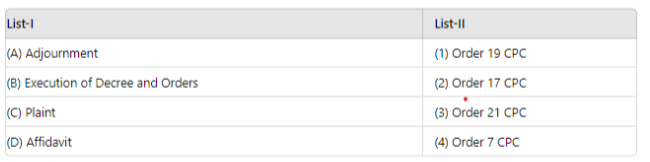
· Order 17 CPC - Adjournment: This order deals with the court's power to adjourn hearings or proceedings. Adjournments are granted for valid reasons and are subject to the court’s discretion.
· Order 21 CPC - Execution of Decrees and Orders: This order governs the process by which a court's decree or order is enforced. It covers various modes of execution, such as attachment and sale of property, arrest and detention, and appointment of a receiver.
· Order 7 CPC - Plaint: A plaint is the formal statement of the claim filed by the plaintiff in a civil lawsuit. Order 7 prescribes the rules for drafting, filing, and admitting a plaint in court, including the necessary particulars and documents that must accompany it.
· Order 19 CPC - Affidavit: This order outlines the rules for using affidavits in civil proceedings. An affidavit is a written statement confirmed by oath or affirmation, used as evidence in court.
Information Booster:
· Order 17 CPC (Adjournments): Adjournments are a common part of court proceedings, allowing parties more time to prepare their case or enabling witnesses to attend. However, frequent adjournments can delay justice, which is why the court's power to grant them is carefully regulated under this order.
· Order 21 CPC (Execution of Decrees): Execution is a critical phase in civil litigation, as it ensures that the judgment or order of the court is carried out. The order provides detailed procedures to ensure that the winning party can effectively enforce their rights as determined by the court.
· Order 7 CPC (Plaint): A well-drafted plaint is essential for the smooth initiation of a lawsuit. Order 7 ensures that the plaintiff's claim is clearly and comprehensively presented, enabling the court to understand the issues at hand.
· Order 19 CPC (Affidavit): Affidavits are vital in civil litigation as they provide a written account of facts, sworn to be true, which can be submitted as evidence without requiring the presence of the witness in court.
Additional Knowledge:
1. Adjournments (Order 17 CPC): The court's discretion in granting adjournments is exercised carefully, keeping in mind the need to avoid unnecessary delays. Courts may impose costs or set strict conditions for adjournments to discourage their frequent use.
2. Modes of Execution (Order 21 CPC): Execution of decrees can involve various methods depending on the nature of the decree, such as attaching movable or immovable property, garnishing bank accounts, or even arresting the judgment debtor in some cases.
3. Drafting a Plaint (Order 7 CPC): The plaint must contain a concise statement of the material facts, the cause of action, the relief sought, and the jurisdiction of the court. It must be signed and verified by the plaintiff.
4. Use of Affidavits (Order 19 CPC): Affidavits are used extensively in civil cases, particularly in interim applications, to provide evidence without the need for oral testimony. The veracity of affidavits is critical, as they carry the same weight as oral evidence given under oath.


