

arrow
arrow
arrow
In an in vitro translation reaction, the 43S pre-initiation complex (PIC) was incubated with the in vitro transcribed and capped mRNA for Gene X, foll
Question

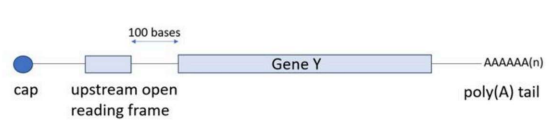
In an in vitro translation reaction, the 43S pre-initiation complex (PIC) was incubated with the in vitro transcribed and capped mRNA for Gene X, followed by addition of the 60S subunit. As a control, mRNA for Gene Y isolated from cells was incubated in the same reaction. The mRNA for Gene Y was bound to the 80S ribosomes and polyribosomes, while mRNA for Gene X remained unbound. In a parallel experiment, mRNAs for both Gene X and Gene Y were found to be associated in vivo with 80S and polyribosomes.
The following statements were made to explain the above observation:
A. The in vitro system was globally defective for 80S assembly.
B. Gene X mRNA has a sequence or structural feature that specifically prevents 80S assembly in vitro.
C. Gene X mRNA lacks a start codon.
D. Gene X mRNA requires other cellular factors which are absent in the in vitro mix to permit initiation.
E. The in vitro assay preferentially degrades Gene X mRNA.
Which one of the following options represents all correct statements?

A.

A and B

B.

B and C

C.

B and D

D.

D and E

Correct option is C

Correct Answer
(c) B and D
Explanation
Gene X mRNA fails to associate with 80S ribosomes only in vitro, while it does so efficiently in vivo, indicating that the in vitro translation system itself is functional. This suggests that Gene X mRNA possesses specific sequence or structural features that hinder initiation in vitro and that it requires additional cellular factors, present in vivo but absent in vitro, to enable proper translation initiation.
Information booster
• In vitro translation systems often lack regulatory RNA-binding proteins
• mRNA secondary structure can influence ribosome scanning and start site recognition
• Certain mRNAs depend on accessory initiation factors or helicases
• In vivo translation reflects a more complete cellular environment
Additional Knowledge
Statement A is incorrect because Gene Y mRNA efficiently forms 80S ribosomes in vitro, showing that 80S assembly is not globally defective.
Statement C is incorrect because Gene X is translated in vivo, which would not be possible without a start codon.
Statement E is incorrect because preferential degradation is unlikely; intact Gene X mRNA can still be detected and translated in vivo.
Similar Questions

TEST PRIME

Access ‘CSIR NET Life Sciences’ Mock Tests with

  • 60000+ Mocks and Previous Year Papers
  • Unlimited Re-Attempts
  • Personalised Report Card
  • 500% Refund on Final Selection
  • Largest Community
1 month
Monthly Saver
students-icon
354k+ students have already unlocked exclusive benefits with Test Prime!
TEST PRIME

Access ‘CSIR NET Life Sciences’ Mock Tests with

  • 60000+ Mocks and Previous Year Papers
  • Unlimited Re-Attempts
  • Personalised Report Card
  • 500% Refund on Final Selection
  • Largest Community
1 month
Monthly Saver
students-icon
354k+ students have already unlocked exclusive benefits with Test Prime!
Our Plans
Monthsup-arrow

