Correct option is B
Solution:
Let C be the total number of teachers who teach chemistry and P be the total number of teachers who teach physics.
Given:
Every second teacher who teaches chemistry also teaches physics, so the number of teachers who teach both subjects from the chemistry group is C/2.
Every third teacher who teaches physics also teaches chemistry, so the number of teachers who teach both subjects from the physics group is P/3.
Let x represent the number of teachers who teach both chemistry and physics. Since these two groups overlap, the number of teachers who teach both chemistry and physics must be the same in both cases.
Therefore, we can set up the equation:
C/2 = P/3
Cross-multiply to find the relationship between C and P :
3C = 2P
=> C = 2/3 P
Now, the number of teachers who only teach chemistry is the total number of chemistry teachers minus those who teach both subjects, which is:
Teachers who only teach chemistry = C - C/2 = C/2
Similarly, the number of teachers who only teach physics is:
Teachers who only teach physics = P - P/3 = 2P/3
To find the ratio of teachers who only teach chemistry to those who only teach physics, we calculate:
Teachers who only teach chemistry / Teachers who only teach physics =
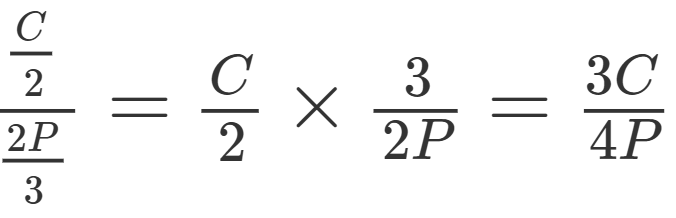
Substitute C = 2/3P into the equation:
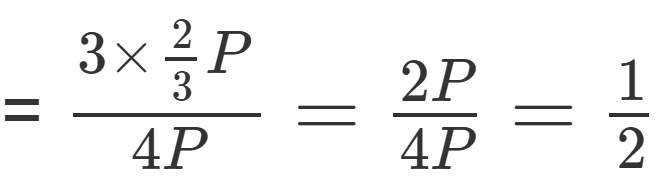
Thus, the ratio of teachers who only teach chemistry to those who only teach physics is 1/2.