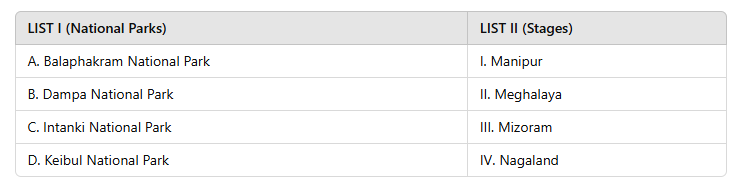
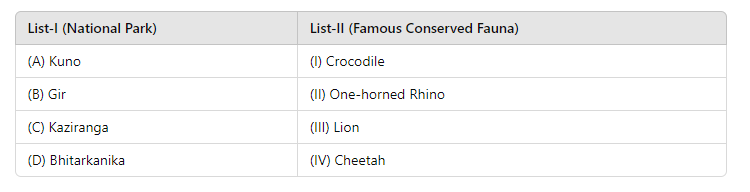
Correct option is D
 (Gamma) Diversity refers to the total species diversity within a landscape or region. It considers the diversity across different ecosystems or habitats within a large geographic area. It encompasses both α (Alpha) Diversity and β (Beta) Diversity:
1.
 (Alpha) Diversity: Refers to species diversity within a particular community or habitat.
2.
 (Beta) Diversity: Measures the variation in species composition between different habitats or communities.
3.
(Gamma) Diversity: Aggregates the diversity of all habitats within a larger landscape or region.
Gamma diversity reflects the overall richness of species in an extensive area composed of multiple ecosystems.
Levels of Biodiversity:
· Genetic Diversity: Variation in genes within a species.
· Species Diversity: Variety of species within a habitat.
· Ecosystem Diversity: Variety of ecosystems in a region.
Diversity Indices:
· Shannon Index: Measures species diversity.
· Simpson Index: Measures the probability of encountering different species.
Landscape Ecology:
· Focuses on spatial patterns and ecological processes within a landscape.
Examples of γ Diversity:
· Diversity in the Amazon rainforest across multiple ecosystems.
· Species variation across various mountain ranges.
Importance of γ Diversity:
· Indicates overall ecosystem health.
· Helps in conservation planning and management.
Additional Knowledge:
·
Alpha Diversity: Measures local diversity within a single ecosystem (e.g., species found in a pond).
·
Beta Diversity: Measures changes in species diversity between ecosystems (e.g., differences between a pond and a forest).
·
Gamma Diversity: Provides a comprehensive picture of biodiversity across a large-scale region (e.g., an entire national park).
·
Conservation Implications: Understanding gamma diversity is critical for protecting biodiversity hotspots and creating effective conservation strategies.
 English
 10 Questions
 20 Marks
 12 Mins