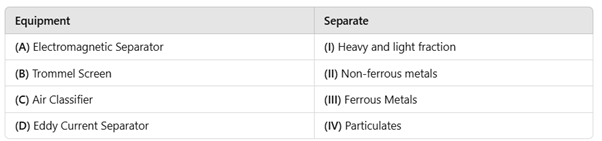
Correct option is A
Introduction
· Atmospheric hazardous chemicals are substances that, even in trace amounts, can cause severe health issues, including cancer, reproductive problems, and immune system damage.
· These chemicals are often classified based on their persistence, bioaccumulation, and toxicity (PBT), determining their long-term impact on the biosphere.
· The degree of hazard is measured by the lethal dose and the specific biological pathways the chemical disrupts upon entry into a living system.
Information Booster
· Dioxin (specifically 2,3,7,8-tetrachlorodibenzo-p-dioxin or TCDD) is considered the most hazardous because it is highly toxic at extremely low concentrations, often measured in parts per trillion.
· It is a Persistent Organic Pollutant (POP) that does not break down easily in the environment and accumulates in the fatty tissues of animals and humans through the food chain.
· Dioxins are primarily produced as unintentional by-products of industrial processes involving chlorine, such as waste incineration, chemical manufacturing, and paper bleaching.
· They are known endocrine disruptors and are classified by the IARC as a Group 1 known human carcinogen, affecting multiple organ systems.
· Due to its extreme toxicity and stability, it is regulated globally under the Stockholm Convention on Persistent Organic Pollutants.
Additional Knowledge
· Carbon monoxide is a significant atmospheric pollutant that interferes with oxygen transport in the blood by binding to hemoglobin, but it is a localized, non-persistent gas that does not bioaccumulate like organic toxins.
· Halons are specialized chemicals used in fire extinguishers that are extremely potent at destroying stratospheric ozone, but their direct physiological toxicity to humans at atmospheric levels is far lower than that of dioxins.
· CFCs (Chlorofluorocarbons) were widely used as refrigerants and are primary drivers of ozone layer depletion and global warming; however, they are chemically inert and non-toxic to humans in the immediate tropospheric environment.
· While Carbon monoxide, Halons, and CFCs pose serious environmental or acute risks, they lack the combination of extreme chronic toxicity, carcinogenicity, and bioaccumulation potential found in Dioxin.
 English
 10 Questions
 20 Marks
 12 Mins