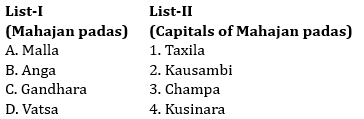
Correct option is D
The term ‘bhaga’ refers to a type of tax during the Mahajanapada period, which was a sixth part
(1/6th) of the agricultural produce. It was a form of land revenue that the ruler or king collected from
the farmers as a share of the produce. This tax was primarily levied on agricultural activities and served
as a significant source of income for the rulers of the Mahajanapadas, enabling them to maintain
administrative machinery, build infrastructure, and fund military operations. The 1/6th share (bhaga)
became a standard taxation rate in many ancient Indian kingdoms, including the later periods, as it was
seen as a fair proportion to ensure the sustenance of both the state and the farmers.
Information Booster:
· Bhaga was a part of the agrarian tax system, supporting the revenue of the kingdom.
· Taxes in ancient India were primarily collected in kind (produce) rather than cash.
· The Mahajanapada period saw the rise of large agrarian societies, increasing the importance of agricultural taxes.
· This taxation system laid the foundation for future revenue collection under different empires in India.
· Other forms of taxes during this period included bali (voluntary offerings) and shulka (custom duties).
Additional Knowledge:
· A tax rate of 1/4th is not recorded in ancient Indian texts for bhaga, though some other regions or rulers may have imposed different rates for various purposes.
· Half of the produce was too high to sustain the agrarian economy; such a heavy tax rate is rarely mentioned in historical contexts.
· 1/3rd of the produce, though mentioned in some texts, was not the standard for bhaga during the Mahajanapada period. The concept of bhaga was specific to the 1/6th portion.
 English
 150 Questions
 150 Marks
 150 Mins