






Correct option is C
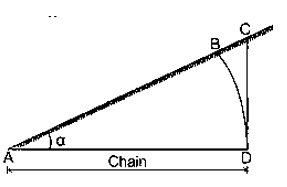
Let α = the angle of slope of the ground and AD = AB =Measured distance
Then AC = measured distance × sec α and BC = AC – AB = (Sec α - 1) × measured distance
The amount (sec α – 1) × measured distance is known as a hypotenusal allowance.
• The chain is stretched in the direction AB and the arrow is placed in advance of the end B of the
chain by an amount equal to (BC), the hypotenusal allowance, such that the horizontal
equivalent of the total distance i.e. (chain length + hypotenusal allowance) is equal to one chain
length.
• The next chain length starts from C and the process is continued until the end of the line is
reached. The required horizontal distance is the equal to number of chains measured


