Correct option is D
The Correct Answer is the Ninth Schedule
The
Uttar Pradesh Zamindari Abolition and Land Reforms Act, 1950 was a significant law passed to abolish the Zamindari system in the state and redistribute land to actual cultivators. It was later placed under the Ninth Schedule of the Constitution to protect it from being challenged in courts on the grounds of violating fundamental rights.
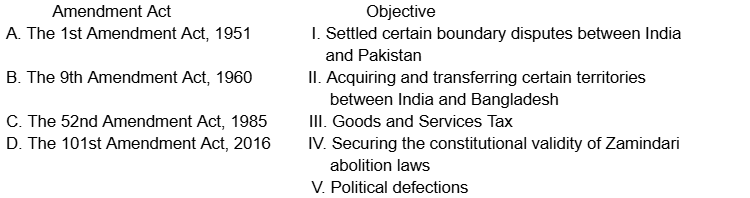
The Ninth Schedule was introduced by the First Constitutional Amendment Act of 1951 through Article 31B to provide immunity to land reform laws and uphold agrarian reforms without judicial interference. This was essential for the progressive redistribution of land and to promote social justice.
3. Information Booster:
·
Uttar Pradesh Zamindari Abolition and Land Reforms Act, 1950:
· Signed by the President on 24th January 1951.
· Came into effect from 1st July 1952 (date of vesting).
· Abolished the rights of intermediaries (zamindars).
· Allowed cultivators (sharecroppers or self-cultivators) to gain ownership of the land.
· Did not impose a ceiling on personal cultivation.
· Contains 344 sections, seven schedules, and is divided into two parts (Chapters 1–6 and 6–12).
·
Ninth Schedule:
· Added through the First Amendment Act, of 1951.
· Protects laws from being challenged in court for violating fundamental rights.
· Created specifically to safeguard land reform and agrarian laws.
· Currently contains over 284 laws.
Additional Knowledge:
·
Tenth Schedule: Deals with the anti-defection law, not land reforms.
·
Eleventh Schedule: Added by the 73rd Amendment, it lists subjects under Panchayati Raj like agriculture, land reforms, animal husbandry, etc., but does not contain laws.
·
Twelfth Schedule: Added by the 74th Amendment, related to Municipalities; irrelevant to land reform acts.
 English
 150 Questions
 150 Marks
 150 Mins